



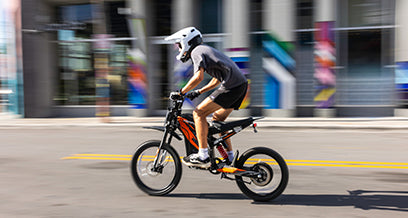

The Best Electric Dirt Bike for Summer Gatherings — From the Backyard BBQ to the Open Trail
Why more North American families are adding electric dirt bikes to their summer plans this year.
Summer in North America Has a Rhythm. The Grill Goes On, and Someone Always Asks "What Else Are We Doing?"
July Fourth is the single biggest BBQ day in the US. Memorial Day and Labor Day follow close behind. Industry data puts grill or smoker ownership at around 80% of American homeowners — and 59% of those who barbecue describe it as a social event, not just a cooking method. The food is almost secondary to the gathering itself.
But there's a pattern that shows up at every backyard cookout, lake house weekend, or family reunion: once the burgers are done and the cooler is half-empty, energy levels diverge. Kids want to move. Teens disappear with their phones. The adults stand around the grill talking about the grill. Nobody quite knows what to do next.
That's the gap that electric dirt bikes for adults are starting to fill — not as a replacement for the cookout, but as the thing that happens after it.
Why Dirt Bikes That Are Electric Work Better Than Gas for Group Riding
Dirt bikes that are electric remove the biggest barriers to casual group riding in one move: they're quiet enough for residential and semi-rural use, throttle response is smoother and more forgiving for mixed-experience groups, and the instant torque from zero RPM makes low-speed maneuvering easier for newer riders than a gas engine's power band ever will.
For summer gathering use specifically, two practical advantages stand out:
No fuel run required. Charge overnight, ride the next day. No one has to make a gas station run the morning of the cookout.
Lower maintenance between uses. Electric drivetrains have significantly fewer moving parts than gas engines — no carb cleaning, no oil changes before a weekend ride. Take it out of storage, charge it, and it's ready.
Three Summer Scenarios Where an Electric Dirt Bike Actually Makes Sense
The Backyard-to-Trail BBQ Day
You've got a few acres, or access to open land nearby. The cookout starts at noon; the bikes come out at 3pm after the food settles. The right electric dirt bike for this scenario prioritizes accessible power delivery and enough range for a sustained afternoon session — not so aggressive that a first-time rider feels out of control, not so underpowered that an experienced one gets bored. Fast-charge capability is a genuine bonus here: a mid-session top-up means you can run a second round before sundown without planning around it.
The Lake House or Campground Weekend
Not everyone ends up at the beach. Around 32% of Americans planning domestic summer trips head to lake destinations or rural retreats where a quiet, capable electric dirt bike off-road machine is far more useful than anything requiring pavement. Gravel paths, forest trails, unpaved camp roads — a mid-drive motor with strong low-end torque handles all of it without drama. And it won't rattle the campsite neighbors awake at 7am, which a gas bike absolutely would.
The Friend Group That Wants Something to Talk About Monday
Summer gatherings live and die on the story that gets retold afterward. A lightweight electric dirt bike that someone pulls out of the garage and says "want to try it?" has a very different energy than a gas bike with an intimidating startup sequence and a learning curve nobody signed up for. The low barrier to entry creates participation. Participation creates the story. For groups where at least a few riders have experience and want something that matches real off-road intent, a dedicated best electric dirt bike model — geometry and suspension tuned for dirt, not compromise — is the version of that story with a better ending.
What to Look for Before You Buy
Seat Height vs. Rider Height
This is the first filter, not the last. A seat height that doesn't match the rider's inseam is a safety issue before it's a comfort issue. Most quality electric dirt bikes for adults publish recommended rider height ranges — 5'3"–6'5" covers most adult males, but if your group includes shorter riders or teenagers, check specifically for models with seat heights at or below 27 inches.
Hub Drive vs. Mid-Drive Motor
Hub motors are simpler, more durable, and lower maintenance — the right call for mixed terrain and casual summer use. Mid-drive motors produce higher torque through the bike's gearing system, which matters on hills and technical trail sections. If your summer riding is mostly flat open land, hub drive is fine. If it involves any real elevation, mid-drive earns its tradeoff.
Real-World Range
Advertised range figures assume flat ground, mild temperature, and a lighter rider at moderate speed. For North American summer conditions — heavier loads, higher speeds, mixed terrain — reduce the stated range by 30–40% to get a realistic number. A model advertised at 60 miles realistically delivers 35–42 miles under typical group riding conditions.
Two Bikes, Not One
One bike at a gathering means a rotation — one person rides while three others wait. Two bikes means actual riding together, which is the point. If you're buying for summer group use, the per-unit math on buying two at once almost always makes more sense than buying one and circling back. HappyRun's current summer lineup includes combo options that bring the effective per-unit cost well below individual purchase price, with free shipping on both units.
Summer Has a Short Window. The Rides You Don't Take Don't Happen.
The North American summer runs about fourteen usable weekends from Memorial Day to Labor Day. Some will be rained out. Some will be claimed by other commitments. The ones that are genuinely free tend to fill themselves with the same thing: someone fires up the grill, someone brings the cooler, and then everyone stands around wondering why the afternoon feels like it's disappearing faster than it should.
Adding electric dirt bikes to that picture doesn't change what a gathering is. It just gives it somewhere to go.


Leave a comment