



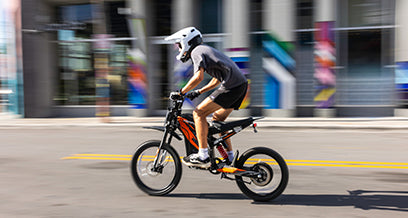


Best Ebike for Commuting in 2026: What Actually Matters Before You Buy
Every morning, millions of people sit in traffic or squeeze onto a packed train just to get to work, and it tires people faster than they admit. A lot of people start looking at e-bikes for exactly this reason. They just want a ride that shows up on time and doesn't drain their wallet. But then they open a listing and get confused seeing numbers like 750W motor, 48V battery, 80 Nm torque. That's the real problem here, not a lack of options but too many specs with no context.
The best ebike for commuting is not always the fastest or most powerful model. It is the one that matches your daily distance, road conditions, storage situation, and riding habits. This guide will help you find the best ebike for commuting based on your route, your building, your local weather, and how much pedaling you actually want to do. We will talk about what actually makes an ebike good for daily riding, the different kinds of bikes you can pick from, and how a commuter ebike is different from an electric motorcycle.
What Makes an Ebike Actually Good for Commuting?
A good commuting ebike is more than just a powerful motor. A weekend cruiser and a commuter ebike are built for different jobs, even if they look almost the same in a product photo. Here is what actually separates a bike that works for daily riding from others:
-
Range vs. your real round-trip distance. Don't just look at the advertised range number; that's usually tested in ideal conditions. A simple rule that works well is to take your daily round trip distance and multiply it by 1.5 for a safety buffer.
-
It gives you a throttle option for stop-and-go traffic, not just pedal assist. An ebike for a city commute lets you get moving from a red light right away instead of waiting on pedal assist sensors to catch up.
-
It's light enough to fit into your actual routine. A good commuting bike works with your building, not against it, whether that means carrying it up a walk-up apartment, down into a subway station, or onto a train platform.
-
It already comes with the extras commuting actually needs. A bike made for daily riding has integrated lights, fenders, and a rear rack built in from the start, not as add-ons you have to buy later.
What separates a true commuter from a weekend bike is how it rides when things aren't perfect. Sealed electronics, a real IP water resistance rating, and tires with enough tread keep a bike reliable on a random Tuesday.
What features should I look for in a Commuter Ebike?
A good commuter ebike should fit your lifestyle, not just look impressive. These are the features that make the biggest difference when you ride every day.
1. Range
Range is the first number people check and honestly the most misunderstood one. For daily commuting, work backward from your route. Figure out your round trip mileage, add a buffer for hills or cold weather, and pick a battery that clears that number with room to spare.
Choose a motor with at least 50Nm of torque to easily handle hills and stop-and-go traffic. A 500Wh+ battery is suggested for standard 10-20 mile round-trip commutes.
2. Accessories
The accessories that matter for commuting are boring on purpose. Fenders keep road spray off your clothes. A rear rack means you can strap on a bag instead of wearing one on sweaty shoulders. Integrated lights turn on with the bike, so you're never fumbling with a separate clip on light in the dark. HappyRun's accessories collection covers most of the gaps, from racks to replacement parts.
3. Motor and Brakes
Peak wattage is the number brands love to advertise, but rated (continuous) wattage tells you what the motor can actually sustain during a normal ride. For hilly climbs, look for at least 500W to 750W of motor power. Always ensure hydraulic disc brakes are included for reliable stopping power.
4. Low Maintenance
A commuter ebike gets ridden five or more days a week, so anything that needs constant fiddling becomes a chore fast. Look for sealed bearings, a belt or chain that doesn't need daily lube, and a battery that's easy to pull out and charge without tools. Puncture-resistant tires cut down on roadside flat repairs too.
Best Ebike for Commuting: Different Types
From city streets to rough roads, choosing the right ebike can make your daily commute more comfortable and enjoyable.
Type 1: Standard Ebike for City Commute
Higher voltage (48V-72V) and amp-hour (15Ah-30Ah) batteries sustain peak motor performance. A 48V 20Ah battery (960Wh) provides ~40 miles at 28 mph, while a 72V 30Ah pack (2160Wh) extends range to 75+ miles. HappyRun’s modular batteries allow hot-swapping during rides, ensuring uninterrupted high-speed city commutes.
You can browse HappyRun's full ebike lineup to compare models at this level.
Type 2: Folding Commuter Ebike
Folding bikes exist for one reason: storage. If you're riding part of your commute and taking a train or bus the rest of the way, or you live somewhere without a spot to lock a bike outside, a folding frame lets you tuck the whole thing under a desk or into a closet.
This style works best for shorter distances or mixed commutes where the ebike only covers part of the trip.
Type 3: Best Electric Fat Tire Bike for Commuting
Electric fat tire ebikes are a great choice for commuters who ride on potholes, gravel, uneven roads, or changing weather conditions. Compared with traditional commuter ebikes, wider tires provide better stability, comfort, and control for different riding environments.
-
HappyRun G60 Pro is a strong example of a commuter-friendly electric fat tire bike. It features a reliable 750W motor delivering up to 2000W peak power and a removable 48V 25Ah lithium battery with UL 2849 certification, providing up to 70+ miles of range. Its 20" × 4" all-terrain fat tires provide better stability on potholes, gravel, and uneven roads, while the full suspension and hydraulic disc brakes improve comfort and control during daily rides. With a 330 lb payload capacity and a comfortable moped-style riding position, the G60 Pro is designed for commuters who want extra comfort, stability, and performance without sacrificing practicality.

-
For riders with longer routes, steeper hills, or a stronger need for performance, HappyRun's G100 Pro offers a more powerful commuting option. Equipped with a 6000W peak motor and a 72V 33Ah dual battery system, it delivers up to 50 MPH speeds and up to 78 miles of range. Its full suspension system, hydraulic brakes, and 20" × 4" tires provide better stability and comfort on both city roads and rough terrain. With a 400 lbs payload capacity, the G100 Pro is built for riders who want an electric fat tire bike with performance closer to an electric motorcycle.

This is where an electric fat tire bike starts to overlap with an electric motorcycle, more on that below.
Type 4: Hybrid Commuter Ebike
Hybrid models sit between a road bike and a mountain bike, with a slightly more upright position than a road bike but thinner tires than a fat tire model. They handle mixed terrain reasonably well without the extra weight of full suspension or oversized tires, which makes them a middle-ground option for commuters who ride a bit of everything.
Best Commuter Ebike Brands & Models to Consider
Choosing the best commuter ebike depends on your riding habits, budget, and the type of performance you need. Some riders prefer a lightweight and comfortable bike for daily city rides, while others want more power, longer range, and extra versatility for different road conditions. Here are some popular commuter ebike brands and models worth considering.
1. HappyRun – Best Commuter Ebike for Power and Performance
For riders who want more than a basic city commuter, HappyRun offers electric bikes that combine everyday practicality with stronger performance. Designed for daily commuting, urban riding, and weekend adventures, HappyRun ebikes feature powerful motors, comfortable riding positions, and long-range battery options to handle a variety of riding conditions. Select models also offer fat tires for added stability and versatility on different surfaces.
Models like the HappyRun G60 Pro are designed for riders who want a comfortable moped-style commuter ebike with extra power, while the G100 Pro provides more performance for longer routes, hills, and mixed terrain. Compared with traditional commuter ebikes that focus mainly on lightweight city transportation, HappyRun models are built for riders who want more capability while still maintaining everyday usability.

2. Aventon – Best Overall Commuter Ebike
Aventon is one of the most recognized commuter ebike brands, known for combining modern designs, reliable components, and user-friendly features. Models such as the Aventon Level.2 and Level.3 series are popular among daily commuters thanks to features like comfortable geometry, integrated lights, torque sensors, and practical battery range.
Aventon is a great choice for riders looking for a refined commuting experience with a focus on comfort, reliability, and smooth handling. Its commuter ebike models are designed to provide a practical balance between everyday transportation needs and an enjoyable riding experience.
3. Lectric – Best Value Commuter Ebike
Lectric has built a strong reputation by offering affordable ebikes with practical features for everyday riders. Models like the Lectric XPress and XP series provide a comfortable riding position, reliable motor performance, and commuter-friendly features at a competitive price point.
For beginners or budget-conscious riders who want a dependable electric bike for commuting, errands, and daily transportation, Lectric is a popular option.
4. Puckipuppy – Budget-Friendly Commuter Ebike
Puckipuppy offers commuter ebikes that focus on affordability, comfort, and versatility. Models such as the Puckipuppy Boxer ST and Samoyed provide features like fat tires, comfortable riding positions, and practical designs for daily transportation.
These models are a good option for riders who want an affordable commuter ebike that can handle different road conditions while providing a stable and comfortable ride.
Ultimately, the best commuter ebike depends on your personal needs.
If you mainly ride short city routes, comfort and ease of use may be the most important factors. If you commute longer distances, ride in areas with hills, or want a more powerful riding experience, choosing an ebike with a stronger motor, larger battery, and versatile design may be a better fit.
How to Choose the Best Ebike for Your Commute
Every commuter has different needs. By considering the factors below, you can choose a commuter ebike that offers the right balance of comfort, performance, and value.
1. Consider Your Daily Distance
Measure your actual round trip distance, not just the one-way number. A short 5-mile round trip barely stresses a battery, but a 20-mile round trip with hills needs serious range and a motor that won't strain.
2. Think About Road Conditions
If your commute is mostly clean pavement, a standard frame with narrower tires rides faster. If you're crossing potholes, train tracks, or gravel shoulders regularly, that's when an electric fat tire bike starts paying for itself.
3. Check Local Weather
Riders in rainy or snowy climates need better waterproofing, puncture-resistant tires, and stronger brakes. A bike that's perfect in a dry, sunny city might struggle through a wet Pacific Northwest winter.
4. Budget Beyond the Purchase Price
The sticker price is only part of the cost. Factor in a helmet, a lock rated for your neighborhood, tire replacements, brake pad wear, and possibly a second charger if you want to charge at work. Check for storage options and a removable battery too.
Commuter Ebike vs Electric Motorcycle: Which One Fits Your Lifestyle?
Some high-powered electric bikes now offer motorcycle-like performance, but they are designed for different purposes. Once you start looking at higher-powered fat tire models, the line between a commuter ebike and an electric motorcycle starts to blur.
|
Feature
|
Commuter Ebike
|
Electric Motorcycle
|
|
Speed
|
Usually 20 to 28 mph in street-legal modes
|
Often 45 to 50 mph or more
|
|
Exercise
|
Yes, pedal assist keeps your legs involved
|
Little to none, mostly throttle-based riding
|
|
Running cost
|
Very low, a few cents to fully charge
|
Low, but higher than an e-bike due to bigger batteries
|
|
Parking
|
Bike racks, apartment storage, easy to bring inside
|
Needs dedicated moped or motorcycle parking in most cities
|
|
Maintenance
|
Minimal, mostly tires, brakes, and occasional chain care
|
More involved due to heavier components, though still no oil changes
|
|
Best use cases
|
Daily commutes under 20 miles, mixed terrain, apartment living
|
Longer commutes, higher speed roads, riders who want speed over exercise
|
None of this means a commuter ebike replaces a car for every trip. But for daily back and forth to work, it often ends up faster, cheaper, and honestly a lot more pleasant than most people expect before they try it.
Conclusion
Picking the right bike really comes down to a handful of factors: your actual daily distance, the condition of your roads, how much weather you'll be riding through, and what you're comfortable spending once you count accessories and upkeep. Get those four things straight first, and the rest of the decision gets a lot easier.
It's worth repeating that the best ebike for commuting isn't automatically the one with the biggest motor or the highest top speed. A 3000 watt motor is wasted power if your commute is five flat miles through quiet streets, and a lightweight standard ebike won't hold up on a route full of potholes and gravel.
Match the bike to the commute you actually have, not the one you wish you had. If you want a deeper look at what daily riding with an ebike actually feels like, our guide on commuting by ebike walks through real routines from riders who made the switch.
FAQs
1. What is the best ebike for commuting if my daily ride is under 10 miles?
For a daily commute under 10 miles, the best ebike is usually a lightweight commuter ebike with a reliable 500W–750W motor and enough battery capacity for your round trip. A standard ebike in the 500 to 750 watt range with a lighter frame is usually enough. It covers the distance easily and costs less to buy and maintain than a bigger fat tire build.
2. Is an ebike for city commute practical through rain, snow, or cold weather?
Yes, a commuter ebike can handle different weather conditions when it is properly equipped. Look for features such as water-resistant electrical components, reliable disc brakes, puncture-resistant tires, and good tire traction. Keep in mind that cold temperatures can reduce battery performance, so you may need extra range capacity during winter rides.
3. How much cheaper is a commuter ebike compared to driving a car every day?
A commuter ebike can significantly reduce daily transportation costs compared with driving a car. Charging an ebike battery usually costs only a few cents, while fuel, parking, insurance, and vehicle maintenance add much higher expenses over time. The total savings depend on your commuting distance and local transportation costs, but many riders find an ebike to be a more affordable option for daily trips.
4. Are electric fat tire bikes overkill for a normal city commute?
Not necessarily. An electric fat tire bike can be a great choice if your commute includes potholes, gravel roads, uneven pavement, or changing weather conditions. The wider tires provide better stability and comfort compared with traditional commuter bikes. However, if you mainly ride on smooth city streets and prioritize speed and easy storage, a standard commuter ebike may be a better fit.
5. How far can a commuter ebike go on a single charge?
The range of a commuter ebike depends on battery capacity, motor power, rider weight, terrain, and riding mode. Most commuter ebikes can travel around 30–70 miles on a single charge under normal riding conditions. For longer commutes, choose a model with a larger battery capacity and enough range to cover your daily route with extra room.
Recent Posts


Sep 01, 2026
Electric Bike Laws in the U.S.: State-by-State Guide

Popular Tags


Leave a comment