



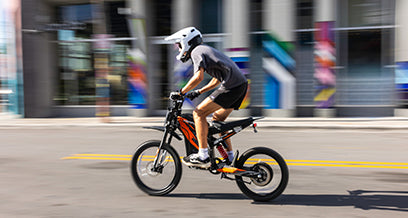


Electric Bike Laws in the U.S.: State-by-State Guide
Electric bikes are increasingly becoming a better choice for commuting, leisure activities, and transport. However, electric bicycle regulations are not necessarily the same throughout the country. Electric bike laws may dictate the speed at which an e-bike can operate, its motor strength, who can ride it, the need for a helmet, and where one may operate the vehicle.
The laws can be different from state to state, as well as from city to city, especially where sidewalks, trails, and other types of multi-use pathways are concerned. The following guide will focus on major states, including California, Florida, New York, Texas, Colorado, and Washington, to inform cyclists about what is expected of them.
Note: E-bike laws can change over time and may vary by local jurisdiction. Riders should always check the latest official regulations before riding.
What Are Electric Bike Classes?
Many states use a three-class system to distinguish different types of electric bikes.
- Class 1 e-bikes Class 1 e-bikes provide motor assistance only while the rider is pedaling. The motor stops providing assistance when the bike reaches 20 mph under the standard three-class system.
- Class 2 e-bikes include a throttle that moves the bicycle without pedaling. In most cases, their motor assistance stops at 20 mph, but this specification may differ according to state law.
- Class 3 e-bikes include electric assistance only while pedaling. This type of e-bike usually goes up to 28 mph. Still, there are variations in different states; for example, New York State law limits Class 3 e-bikes at 25 mph.
Power is important too. Some states, such as California, Florida, Colorado, and Washington, use a cap of 750 watts to define what constitutes a qualifying e-bike. The vehicle may fall under different regulations as an alternative form of motorized transportation instead of an electric bike.

Electric Bike Laws by State
Electric bicycle laws vary greatly from one state to another in the US, with every individual state having its own laws that pertain to e-bike classification, motor wattage, speed, helmet use, age of rider, and location where electric bikes can be used.
California Electric Bike Laws
An electric bike is legally defined in California as one that has fully operational pedals and an electric motor with a maximum of 750 watts of power. Class 1 and Class 2 e-bikes stop assisting at 20 mph, whereas Class 3 bikes stop assisting at 28 mph and are supposed to have a speedometer.
Qualifying e-bikes do not require a driver's license, vehicle registration, license plates, or financial responsibility. Operators below the age of 16 are prohibited from riding Class 3 e-bikes, and both Class 3 operators and passengers are required to wear a well-fitted helmet when cycling in any street, bikeway, or public bike path or trail.
California further permits the authorities to regulate or prohibit e-bikes from being ridden on certain trails. Moreover, current state laws allow pilot programs involving further Class 2 regulations in Marin County and youth regulations in San Diego County. Resource: (California Vehicle Code § 312.5) (California Vehicle Code §21213)
Florida Electric Bike Laws
In Florida, the definition of an electric bicycle is a bicycle or tricycle that features fully functioning pedals, a seat or saddle, and an electric motor not exceeding 750 watts. Class 1 and Class 2 electric bikes cut off the assistance at 20 mph, while Class 3 ones cut off the assistance at 28 mph.
The qualified e-bikes are exempt from any Florida electric bike laws regarding financial responsibility, license, registration, and title certificates for motor vehicles. The riders can ride e-bikes where bicycles are permitted in Florida, such as streets, highways, roads, shoulders, bike lanes, and bike or multi-use paths.
Nevertheless, the local governments and agencies managing paths, trails, beaches, or dunes can limit or even prohibit the driving of e-bikes on those territories. Also, in Florida, the manufacturer and distributor must put labels showing the classification, maximum assisted speed, and motor output in watts.
Resource:(Florida Statutes §316.20655)
New York Electric Bike Laws
An e-bike with electric assist is described by New York as an e-bike that does not exceed 36 inches wide, powered by a motor less than 750 watts, operable by pedals, and equipped with devices in compliance with the relevant federal standards for bicycles. Assistance in Class 1 and Class 2 e-bikes is limited to 20 mph.
However, New York's Class 3 differs, as it is limited to use within a city with a population of one million people or greater, and the assistance can reach 25 mph. Additionally, state law obliges the operators of Class 3 electric-assist bicycles to use helmets that comply with relevant standards.
There are special operating rules in New York City. Class 1, 2, and 3 e-bikes are allowed in NYC, but the city regulations set the 15-mph maximum speed and forbid riding e-bikes on sidewalks.
(New York Vehicle & Traffic Law §102-c and 1238) (NYC Department of Transportation – Electric Bicycles)
Texas Electric Bike Laws
An electric bike in Texas must have fully functional pedals and an electric motor with a power output of under 750 watts, and its maximum assisted speed should not exceed 28 mph. Class 1 and Class 2 electric bikes can have a maximum assisted speed of up to 20 mph, whereas Class 3 e-bikes assist at speeds that range from more than 20 mph but less than 28 mph.
A person must be at least 15 years old to ride a Class 3 e-bike. The motor is required to either disengage or cease operating when the person stops pedaling or braking. As a rule, e-bikes enjoy the right to operate on highways and other areas where regular bicycles are allowed. Local authorities, however, have the right to prohibit the use of bicycles on sidewalks and set speed limits for bicycles.
(Texas Transportation Code §664.001)(Texas Transportation Code §551.106)
Colorado Electric Bike Laws
An electric-assisted bicycle is defined in Colorado as a vehicle that has two or three wheels and pedals and can be completely propelled by an electric motor of up to 750 watts. The maximum speed that is achieved in classes 1 and 2 is 20 mph, while in class 3 it is 28 mph and must have a speedometer.
The riders of electric bicycles are exempt from the need to register and license motor vehicles. The age limit for those who are permitted to ride class 3 electric bicycles is 16 years old, unless they act as passengers, and those below 18 years old who ride such electric bicycles must use helmets. The law requires Colorado e-bikes to show identification of their class, the maximum speed that can be achieved, and the power of the motor.
Resource:(E-bikes in Colorado)(Colorado General Assembly — HB25-1197)
Washington Electric Bike Laws
In Washington, an electric-assisted bicycle has two or three wheels, operational pedals, a seat, and an electric motor with a maximum output of 750 watts. Both Class 1 and Class 2 assistance cease at 20 miles per hour, whereas Class 3 assistance stops at 28 miles per hour and also requires a speedometer.
The current 2026 Washington law also excludes any vehicle that is able to exceed 20 miles per hour using its own electric power from being categorized as an electric-assisted bicycle. Moreover, some vehicles can be excluded from the statutory requirements for electric-assisted bicycles due to their design or ability to be easily converted.
There is no need for a driver's license to operate an electric-assisted bicycle. However, minors younger than 16 cannot operate a Class 3 electric-assisted bicycle. Additionally, manufacturers and distributors must label electric-assisted bicycles by class, maximum speed, and motor wattage. (Washington Revised Code §46.20.500)
Resource: (Washington Revised Code §46.04.169) (Washington Ebike Laws Code §46.04.169)
Key Rules to Check Before Riding an Electric Bike
Before riding an electric bicycle, it is important to know the classification of the bike, the power of the motor, and the speed capacity of the vehicle, as well as any additional safety regulations that may apply.
- Check the e-bike class. See if your e-bike is classified as Class 1, Class 2, or Class 3. This classification may determine your speed limits, helmet requirements, age limits, and places where you are allowed to ride the e-bike legally.
- Confirm motor power and speed. Make sure you know your e-bike’s motor wattage and maximum assisted speed before riding. When comparing models, consider your riding needs. For example, fat tire electric bikes are suitable for mixed terrain, while electric cargo bikes are a practical option for riders who need extra carrying capacity.
- Follow helmet and age requirements. Requirements regarding helmets and minimum age differ from one state to another and depend on the classification of the e-bike. Find out what requirements apply to you, especially when riding a Class 3 electric bike.
- Check local riding restrictions. State law for ebike is not always the last word in the matter. Some restrictions may be imposed by cities, counties, parks, and other bodies concerning the use of e-bikes.
Electric Bikes to Consider for Different Riding Needs
If you need reliable UL 2849-certified electric bikes to use for commuting, off-roading, or transporting additional equipment, then there are several types of HappyRun bikes to choose from. Considering the technical information offered, here are the best e-bikes that are distinguished by a number of qualities.
HappyRun Tank G60 UL 2849 Certified Electric Dirt Bike
The HappyRun Tank G60 is a hybrid e-bike that features a 750W motor, wide tires, and full suspension, and is UL 2849 certified. The ebike features a 48V 13Ah lithium battery capable of delivering a range of 68+ miles.
Additionally, the bike features hydraulic disc brakes for fast and responsive braking. The half-twist throttle and seven-speed drivetrain provide various options for speed control in various environments. The e-bike features a load capacity of 330 lbs and wide 20 x 4-inch road tires.
Key Features:
- 750w (Peak 1500W) motor capable of speeds up to 20mph
- Electrical system certified to UL 2849
- Maximum pedal-assisted distance of 68 miles
- Fat tires, size 20 x 4 inches
- Hydraulic disc brakes, both front and rear

HappyRun G70 UL 2849 Certified Electric Cargo Bike
The HappyRun G70 is built for those who require extra storage without giving up comfort and distance. It is comparable to other electric cargo bikes used for commuter travel and carrying equipment.
The cargo electric bike comes with dual 48V 26Ah batteries, giving it a maximum range of 85 miles, and a 750W (Peak 2000W) motor, which allows speeds of up to 20 mph. It can support up to 330 lbs and has a detachable rear seat, which can be replaced by a cargo rack.
Key Features:
- 750W motor (Peak 2000W) with a top speed of 20 mph
- Dual battery pack with a range of 85 miles
- Payload of 330 lbs
- Rear seat can be removed for cargo rack installation
- UL 2849-certified electrical system

HappyRun Tank G60 Pro UL 2849 Certified Electric Bike
The HappyRun Tank G60 Pro incorporates a 750W (Peak 2000W) motor and a 48V 18.2Ah battery, giving more than 70 miles of range. The UL 2849 certification ensures that the e-bike meets the standards of electrical safety, while full suspension and fat 20 x 4-inch tires guarantee comfortable riding on rugged terrain.
Hydraulic disc brakes, seven-speed gears, and half-twist throttle contribute to its agile handling. Capable of carrying a 330 lbs load and featuring an adjustable suspension fork, the G60 Pro is ideal for riders who need an all-terrain long-range bike.
Key Features:
- 750w (Peak 2000W) motor capable of reaching speeds up to 20 mph
- 48V/18.2Ah battery with over 70 miles of estimated range
- Electrical system UL 2849-certified
- 20 x 4-inch fat tires for all-terrain use
- Hydraulic disc brakes and suspension system

Is There an Ebike Tax Credit in 2026?
The ebike tax credit situation is separate from the federal electric-vehicle incentives. As per the IRS, as of 2026, the federal new, previously owned, and qualified commercial clean vehicle credits are not available for any vehicles purchased after September 30, 2025. These credits are for qualifying vehicles with at least four wheels; therefore, these should not be regarded as federal e-bike credits.
Nevertheless, state rebates, local incentives, and utility programs could be available. However, eligibility requirements, income caps, qualifying e-bike criteria, purchase deadlines, and more are different for each individual program. Buyers should make sure to check for current incentives on an official government website or utility website.
Where Can You Ride an E-Bike?
- Roads: E-bikes are normally allowed on roads where bicycles are permitted, but riders have to abide by the laws that apply to traffic and any state-specific restrictions.
- Bike lanes: Riders can often ride along designated bike lanes, but restrictions might apply in certain states or municipalities depending on the class of the e-bike.
- Bicycle paths: Some bicycle path access is allowed for some classes of e-bikes, but access varies from state to state and from municipality to municipality.
- Multi-use trails: Access for e-bikes on multi-use trails is possible, but there are restrictions that may apply in certain cases.
- Sidewalks: The rules for riding on the sidewalks using an e-bike vary widely between different cities or counties, and riders have to look at the respective restrictions.
- Parks: Access in parks is dependent upon the rules set by the park authority, which might impose further restrictions on certain trails or recreational areas.
How to Stay Legal When Riding an E-Bike
Before you ride, ensure that the class of your bicycle, the power of its motor, and the maximum speed at which it assists are all in line with the law in the jurisdiction in which you plan on using it.
When selecting the right electric bike, the HappyRun electric bike store can help you compare the best models with their perfect features. Make sure that the modifications made do not alter its category or capability to achieve a certain speed. Several states have taken steps to consider labeling and modification issues, making it necessary for the e-bike to meet the initial specifications to qualify as one.
Most riders searching for certified models search and explore UL 2849-certified electric bikes for more options. Nonetheless, certification alone cannot dictate whether a certain bike is allowed on all roads and trails.
Conclusion
It is important to understand electric bike laws prior to purchasing and riding one, since different states have different laws. Motor power, speed limit, classification of electric bikes, helmet laws, age restrictions, and areas where one can ride the bike are just some of the things that might matter.
Before buying or riding an e-bike, ensure that you are familiar with the laws governing your particular e-bike by checking its specifications. Checking for electric bike laws by state is important since it can be instrumental in choosing an appropriate e-bike.
FAQs
Are electric bikes legal in all 50 states?
E-bikes are regulated in the whole United States, but different states have different laws on e-bikes. Laws may include motor size, speed, classification, helmet, minimum rider age, and riding area. Make sure to always check the laws for your particular state.
Do I need a license to ride an electric bike?
Most e-bikes that meet state requirements do not require a driver's license, vehicle registration, or insurance. However, requirements can vary depending on the state, e-bike classification, and whether the bike meets the legal definition of an electric bicycle.
What is the speed limit for an electric bike?
The assisted speed limit depends on the e-bike class and state law. Under the common three-class system, Class 1 and Class 2 e-bikes typically provide assistance up to 20 mph, while Class 3 e-bikes generally provide assistance up to 28 mph. However, some states have different requirements.
Do electric bikes need to be registered?
Most e-bikes that meet the legal requirements are not required to be registered as motor vehicles. However, registration rules vary by state and may depend on the bike’s specifications and classification.
Can I ride an electric bike on sidewalks and trails?
Accessibility of sidewalks and trails may vary from state to state, city to city, park to park, and even from trail management organization to organization. In some areas, you are allowed to use e-bikes, but other places may restrict or even ban them.


