



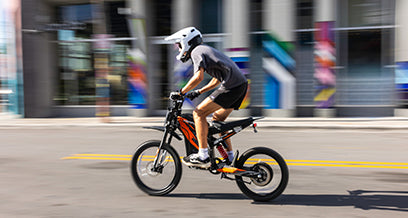


Electric Bike Classes 1, 2, 3 Explained: Guide to E-Bike Classifications
The rapid rise of electric bikes across the United States has transformed modern transportation, offering an eco-friendly, efficient, and fun way to commute or explore the outdoors. However, as more riders hit the streets and trails, navigating the legal landscape can become confusing. To maintain safety and order, regulatory bodies have established specific categories that govern where and how these vehicles can be operated. Understanding these rules is essential before purchasing an electric bike to ensure compliance with local laws.
This comprehensive guide explains electric bike classes in detail, including the differences between Class 1, Class 2, and Class 3 models. By breaking down the differences in speed, motor assistance, and legal access, this article helps riders make an informed decision. Whether commuting to work or tackling rugged off-road terrain, knowing these classifications ensures a safe and lawful riding experience.
E-bike classification laws vary by state and are subject to change; always verify current regulations with your local DMV or park authority before riding.
What Are Electric Bike Classes and Why Do They Matter?
Before diving into the specific categories, it is important to understand the regulatory framework that defines these modern electric vehicles. As e-bikes grew in popularity, local governments faced challenges in distinguishing them from traditional bicycles, mopeds, and high-speed motorcycles. To address this, a standardized classification system was developed to create clear guidelines for manufacturers, riders, and law enforcement.
The Origin of the Three-Class System
The three-class e-bike system was introduced and promoted by PeopleForBikes, a U.S. bicycle industry coalition and advocacy nonprofit representing bike brands and suppliers, to create a more consistent framework for e-bike regulations across the United States.
Before its adoption, e-bike laws varied widely between states, making it difficult for riders to understand where they could legally ride. Today, many states use this classification system to define speed limits, throttle rules, and access requirements for e-bikes.
Why Classifications Matter for Riders
For riders, these classifications dictate exactly where a bike can be operated. Local municipalities, state parks, and federal land management agencies use these classes to determine access to paved bike paths, multi-use trails, and single-track mountain biking routes. Operating an incorrect class of bike on restricted trails can result in fines or equipment confiscation. Additionally, these classes influence safety requirements, such as minimum age limits and mandatory helmet laws, making compliance critical for every rider.
How Are Electric Bikes Classified?
Electric bikes are generally classified based on three key factors: maximum assisted speed, motor assistance type, and throttle availability. These factors determine how an e-bike operates, where it can legally be ridden, and which category it belongs to under the three-class e-bike system.
1. Maximum Assisted Speed
The most important factor in e-bike classification is the maximum speed at which the motor can provide assistance. Class 1 and Class 2 electric bikes provide assistance up to 20 mph, while Class 3 electric bikes can assist riders up to 28 mph. Once an e-bike reaches its designated speed limit, the motor must stop providing assistance, although riders can continue faster through their own pedaling effort.
2. Motor Assistance Type
Electric bikes are also classified by how the motor provides power. Some models use pedal assist systems (PAS), which activate the motor only when the rider is pedaling. Others use a throttle system that allows the motor to propel the bike without pedaling. The type of assistance plays a major role in determining whether an e-bike falls into Class 1, Class 2, or another category.
3. Throttle Availability
The presence of a throttle is another key difference between e-bike classes. Class 1 electric bikes do not include throttles and rely entirely on pedal assistance. Class 2 electric bikes feature a throttle that can propel the bike independently, while Class 3 models are typically pedal-assist only in most states, although specific regulations may vary by location.
By understanding how electric bikes are classified, riders can better compare different models and choose an e-bike that matches their riding style, local regulations, and intended use.
What is the Difference Between Different Electric Bike Classes?
While Class 1, Class 2, and Class 3 e-bikes may look nearly identical at a glance, the differences between them go far beyond appearance. Each electric bike class is defined by a distinct combination of top assisted speed, throttle availability, and pedal-assist requirements — and these technical differences directly shape where a bike can legally be ridden, what safety equipment is required, and who can operate it. Before choosing an e-bike, it's worth understanding exactly how these three classes compare side by side.
Electric Bike Classes Comparison Chart: Class 1 vs Class 2 vs Class 3
To help riders quickly evaluate their options, comparing the technical and legal boundaries of each electric bike class side-by-side is highly beneficial. Each category serves a distinct purpose, balancing speed, control, and path accessibility.
The following comparison table outlines the key differences between the three standard e-bike classifications to help consumers identify which category aligns with their local riding regulations and personal needs:
|
Electric Bike Classes Comparison Chart: Class 1 vs Class 2 vs Class 3
|
|||||
|
E-Bike Class
|
Maximum Assisted Speed
|
Throttle Presence
|
Pedal Assist Required
|
Minimum Age / Helmet Requirement
|
Typical Trail & Path Access
|
|
Class 1
|
20 MPH
|
No
|
Yes
|
No federal minimum age; helmet laws vary by state
|
Most bike paths, multi-use trails, and single-track mountain bike trails
|
|
Class 2
|
20 MPH
|
Yes
|
No (Throttle can propel bike alone)
|
No federal minimum age; helmet laws vary by state
|
Public streets and paved multi-use paths; some natural trails may restrict throttle-equipped models
|
|
Class 3
|
28 MPH
|
No
(In most states)
|
Yes
|
Typically 16+; many states require helmets, especially for younger riders
|
Public roads and designated commuter lanes; some recreational paths may have restrictions
|
Class 1 Electric Bike: Pedal-Assist Only (Up to 20 MPH)
The first category represents the most widely accepted form of electric bicycle on public pathways. Designed to mimic the natural feel of traditional cycling, these models rely entirely on the rider's physical effort to activate the onboard motor.
What Is a Class 1 Electric Bike?
A class 1 electric bike is equipped with a motor that provides assistance only when the rider is actively pedaling. This is known as a pedal-assist system (PAS). The motor monitors the rider's pedaling input and adds a proportional amount of power to ease the effort. However, motor assistance is legally capped and will automatically stop helping once the bicycle reaches a speed of 20 mph. If the rider wishes to go faster, they must rely solely on their own leg power.
Where Can You Legally Ride Class 1 E-Bikes?
Because they require active pedaling and have a modest speed limit, Class 1 models enjoy the broadest legal access of any e-bike category. They are generally permitted anywhere traditional bicycles are allowed. This includes city streets, dedicated bicycle lanes, paved multi-use paths, and most public mountain biking trails. Their conventional riding style makes them highly accepted by trail organizations and local park authorities.
Class 2 Electric Bike: Throttle-Assisted Convenience (Up to 20 MPH)
For riders seeking a more effortless experience, the second category introduces a direct power mechanism. This class allows the vehicle to propel itself forward without requiring continuous physical effort from the rider.
What Is a Class 2 Electric Bike?
When asking "what is a class 2 electric bike", the defining characteristic is the presence of a throttle. Unlike pedal-assist models, a class 2 electric bike features a motor controlled by a throttle mechanism, such as a grip twist or a thumb button on the handlebar. This allows the motor to propel the bike forward even if the rider is not pedaling at all. Similar to Class 1, the motor assistance on a Class 2 model is strictly capped at a top speed of 20 mph.
Throttle vs. Pedal Assist: How They Work Together
Most Class 2 models offer a hybrid approach, giving riders the flexibility to choose how they ride. Users can utilize standard pedal-assist modes to get exercise and extend battery range, or they can engage the throttle-only mode for effortless cruising. This dual functionality makes Class 2 models highly versatile, especially for individuals who need assistance starting from a complete stop, climbing steep hills, or commuting without breaking a sweat.
Trail and Path Access Restrictions for Class 2
While Class 2 models share the same 20 mph speed limit as Class 1, their throttle capability leads to different access rules in certain areas. They are widely permitted on public streets, road shoulders, and paved multi-use commuter paths. However, they face stricter limitations on natural-surface trails. Many single-track mountain bike trails and wilderness paths restrict Class 2 models to prevent trail damage and maintain a traditional trail experience.
Class 3 Electric Bike: High-Speed Commuting (Up to 28 MPH)
The third category is designed specifically for speed and efficiency, making it the preferred choice for long-distance commuters. Because of the increased speed capabilities, these models are subject to additional operational guidelines.
What Is a Class 3 Electric Bike?
When exploring what is a class 3 electric bike, the primary differentiator is the maximum assisted speed. A class 3 electric bike provides motorized assistance up to a top speed of 28 mph. In most states, these vehicles must be pedal-assist only, meaning they do not feature a throttle, though some state laws allow a throttle up to 20 mph as long as the pedal assist goes up to 28 mph. Additionally, many Class 3 e-bikes include speedometers, and some states require them for operation.
Speed and Motor Power Specifications
To sustain a speed of 28 mph safely, Class 3 models typically feature more robust electrical components. They are often equipped with motors up to 750W in the US, although power limits vary by state to handle the increased load and provide rapid acceleration. The frames, brakes, and tires on these models are also engineered to withstand the higher kinetic energy and stress associated with high-speed travel, ensuring the rider remains stable and in control.
Age Limits, Helmets, and Road Restrictions
Due to the increased potential for high-speed collisions, Class 3 models face more specific regulations among the three standard classes. Many states enforce a minimum rider age of 16 years old for Class 3 operation. Furthermore, many states require helmets for Class 3 riders, especially younger riders.
Because of their speed, these bikes may have restrictions on some multi-use recreational paths and bike trails, restricting them to road shoulders, designated commuter lanes, and public streets.
High-Performance E-Bikes Beyond Class 1, 2, and 3
Unlike traditional Class 1, Class 2, and Class 3 e-bikes, some high-performance models are designed with higher power output and adjustable riding modes for riders who need more capability beyond standard classifications.
These multi-mode e-bikes give riders more flexibility for different riding environments:
-
Street Riding: Lower power modes can help riders follow local speed regulations for everyday commuting and urban riding.
-
Off-Road Adventures: Higher-performance settings provide more torque, power, and capability for private land or permitted off-road trails.
-
High-Performance Riding: Advanced models with larger battery systems and powerful motors can deliver significantly higher speeds and performance compared with standard e-bike classes.
However, riders should always follow local regulations and select appropriate power settings based on where they ride. High-power modes that exceed standard e-bike limits should only be used in permitted areas, such as private property or designated off-road locations.

Finding Your Perfect Ride: Which Electric Bike Class is Right for You?
Choosing the ideal electric bicycle requires analyzing daily riding habits, local terrain, and personal performance expectations. Matching these factors to the correct electric bike classes ensures a satisfying, safe, and legally compliant investment.
Matching Your Riding Style to the Right Class
Different riding environments demand different features and power delivery methods. Consumers can generally categorize their needs into three primary styles:
-
The Commuter: Prioritizes speed, efficiency, and long-range capabilities to replace a car. Class 3 models or high-speed multi-mode vehicles are ideal for keeping pace with city traffic.
-
The Trail Explorer: Demands robust durability, superior suspension, and high torque to navigate steep, rugged off-road terrain. Fat tire electric bikes are perfect for these adventures.
-
The Leisure Rider: Prefers a relaxed, comfortable riding posture and the convenience of an effortless throttle. Class 2 models are excellent for casual neighborhood cruising and flat paved paths.
Multi-Mode and Off-Road E-Bike Recommendations
To help you transition seamlessly from defining your riding style to choosing your actual ride, HappyRun offers a premium lineup of high-performance electric bikes. These models are engineered to handle both daily street commuting and extreme off-road adventures, utilizing selectable power modes to allow riders to adjust performance based on different riding environments and local regulations.
For a trail explorer who wants a versatile e-bike that can transition between everyday riding and off-road adventures, the HappyRun Tank G60 Pro All-Terrain E-Bike is an excellent choice. Its 750W motor (2000W peak motor), 20×4-inch fat tires, and full suspension system provide the stability and control needed for gravel, dirt trails, sand, and other challenging surfaces. The hydraulic disc brakes improve safety when riding at higher speeds, while the 48V 25Ah battery delivers up to 70+ miles of range for longer adventures.
With features such as UL 2849 certification, NFC smart unlocking, and adjustable riding modes, the G60 Pro offers the flexibility riders need when moving between regulated street riding and private off-road terrain. It is a strong option for riders who want the comfort of a moped-style electric bike without sacrificing all-terrain capability.
-
👉Shop HappyRun's Tank G60 Pro to elevate your off-road adventures today.
For commuter or speed enthusiast, the HappyRun G100 Pro High-Performance electric motorcycle offers a powerful multi-mode solution. Built around a 72V system with dual batteries, it delivers up to 50 MPH top speed, a 6000W peak motor, and extended range for riders who need extra power for commuting, recreation, and private off-road riding.
Its retro-inspired design, high-capacity dual-battery setup, and hydraulic braking system make it a strong choice for experienced riders seeking a premium high-performance e-bike. With selectable riding modes, the G100 Pro can adapt to different environments, from everyday street riding to permitted private off-road trails.
-
👉Explore HappyRun's G100 Pro and redefine your daily commute.
By offering multiple selectable riding modes, these HappyRun models allow riders to adjust speed and power output for different environments. Riders can choose lower power settings for everyday riding and access higher-performance modes where permitted, such as private trails and off-road areas.
Note: The G100 Pro exceeds the standard Class 1-3 e-bike limits and is intended for private property or off-road use only — not for public roads or bike paths.

How Do I Know If My E-Bike Is a Class 1, 2, or 3?
The fastest and most reliable way is to check the classification label on the bike frame.
Most U.S. states require e-bike manufacturers to affix a label in a visible location (usually near the head tube or down tube) that states:
-
The class number (1, 2, or 3)
-
Maximum assisted speed
-
Whether a throttle is present
-
Motor power rating (typically up to 750W)
If you can't find a label, you can determine the class by asking these three questions:
-
Does it have a throttle?
-
Yes, it has a twist-grip or thumb throttle that can propel the bike without pedaling → Class 2
-
No throttle, motor only assists while pedaling → It's either Class 1 or Class 3, go to the next step
-
-
What's the maximum speed the motor will assist to?
-
Assistance cuts off at 20 mph → Class 1
-
Assistance continues up to 28 mph → Class 3
-
-
Check the manufacturer's spec sheet or product page Every properly labeled e-bike should have its class listed in the owner's manual or on the manufacturer's website. This is especially important for multi-mode e-bikes (like HappyRun's selectable-mode models), where different riding modes may correspond to different legal classes — in these cases, always defer to the manufacturer's official classification rather than judging by speed alone.
Conclusion
Understanding the differences between Class 1, Class 2, and Class 3 electric bikes is essential for any rider looking to invest in a new vehicle. These classifications not only dictate the mechanical limits of the bike, such as top speed and throttle integration, but they also determine where the bike can legally be operated. By matching a riding style to the correct class, riders can ensure a safe, legal, and enjoyable experience on both city streets and wilderness trails.
For those who want the best of both worlds—legal street compliance and raw off-road power—multi-mode models like HappyRun's electric bike series offer the perfect solution. With advanced engineering, robust safety certifications, and selectable power modes, these high-performance machines are built to adapt to any environment, providing the ultimate riding experience wherever the road leads.
FAQs about Electric Bike Classes
What Class Is My E-Bike?
Your e-bike class depends on three factors: maximum assisted speed, throttle availability, and motor assistance type. Class 1 models use pedal assist up to 20 mph, Class 2 models include a throttle up to 20 mph, and Class 3 models provide pedal assistance up to 28 mph.
What Is the Fastest Class of Electric Bike?
Class 3 is the fastest official e-bike class, offering pedal assistance up to 28 mph. Some high-performance electric bikes exceed Class 3 limits with more powerful motors and higher speeds, but they may be considered out-of-class models and face different regulations.
What is the main difference between Class 1 and Class 3 e-bikes?
The main differences are speed and riding restrictions. Class 1 e-bikes provide pedal assistance up to 20 mph and are generally allowed in more areas, while Class 3 e-bikes provide assistance up to 28 mph and often have additional regulations due to their higher speed.
Can a Class 2 e-bike be ridden on standard bicycle paths?
Yes, in most jurisdictions, Class 2 electric bikes are allowed on standard bicycle paths and paved multi-use trails because their top speed is capped at 20 mph. However, local regulations can vary, and some single-track mountain bike trails specifically restrict throttle-equipped bikes to prevent trail wear.
Do you need a license or insurance to ride a Class 3 e-bike in the US?
Generally, no. In most areas, Class 3 e-bikes are regulated as bicycles rather than motor vehicles, so riders typically do not need a driver's license, registration, or insurance. However, requirements can vary by state and local regulations, so riders should always check the rules in their area before riding.
How Do I Know What Class My E-Bike Is?
Check the classification label on your bike's frame, which is usually located near the head tube or down tube — it will state the class number, top assisted speed, and whether a throttle is present. If there's no label, you can determine the class by checking for a throttle (Class 2), the top assisted speed (20 mph for Class 1, 28 mph for Class 3), or referring to the manufacturer's product specifications.
Recent Posts

Sep 09, 2026
E-Bike Motor Types Explained: Hub Motor vs Mid-Drive


Sep 01, 2026


Leave a comment