




What Are Customizable Moped-Style E-Bike Kits and Why Do They Matter
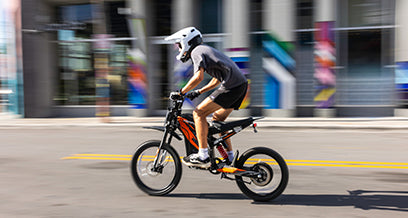
Customizable moped-style e-bike kits allow riders to convert traditional bicycles into electric moped-style bikes using modular components like motors, batteries, and frames. These kits prioritize aesthetics, performance, and personalization, blending retro moped designs with modern e-bike technology. They offer eco-friendly transportation, cost savings vs. prebuilt e-bikes, and legal flexibility in many regions when adhering to local e-bike classifications.
How Do Moped-Style E-Bike Kits Enhance Riding Flexibility?
These kits let riders choose motor power (250W–1500W), battery capacity (48V–72V), and frame materials (aluminum/steel). Users can add vintage-inspired elements like leather seats, chrome accents, or LED lighting systems. This modularity ensures compliance with local e-bike laws while enabling upgrades like hydraulic brakes or dual suspension for off-road use.
What Components Are Critical in a Moped E-Bike Conversion Kit?
Key components include mid-drive/hub motors (500W+ recommended), lithium-ion batteries (13Ah–20Ah), torque sensors, and LCD displays. High-quality kits integrate waterproof wiring harnesses, torque arms for safety, and programmable controllers to adjust speed/power ratios. Compatibility with standard bicycle bottom brackets and dropout widths (135mm–145mm) is essential for seamless installation.
Mid-drive motors excel in hilly terrain by leveraging the bike’s gears, while hub motors offer simplicity for flat commutes. Battery placement also matters—rear rack mounts affect weight distribution, whereas downtube batteries maintain a lower center of gravity. For optimal performance, match motor wattage to battery voltage. For example, a 52V battery paired with a 1,000W motor delivers balanced torque and efficiency. Below is a comparison of common motor types:
What is a Moped-Style E-Bike and Why Choose One?
| Motor Type | Best For | Average Range |
|---|---|---|
| Mid-Drive | Hills/Off-Road | 40–60 miles |
| Rear Hub | Urban Commuting | 30–50 miles |
| Front Hub | Flat Terrain | 25–40 miles |
Which Safety Standards Should Custom Kits Comply With?
Kits should meet UL 2849 (electrical safety), EN 15194 (EU e-bike compliance), and IP65 water resistance. Brake motor cutoff switches, reinforced dropout designs, and temperature-protected batteries are non-negotiable for preventing accidents. Always verify local laws—for example, US Class 2/3 e-bikes require speed limiters (20–28 mph).
How Does Customization Impact Battery Efficiency?
Larger batteries (72V 20Ah) extend range to 70+ miles but add weight. Smart battery management systems (BMS) with Bluetooth monitoring optimize energy use. However, pairing high-wattage motors (1500W) with undersized batteries accelerates drain. Aerodynamic moped fairings can improve efficiency by 15–20% by reducing drag.
Rider behavior significantly affects battery life. Aggressive acceleration and constant throttle use can reduce range by up to 30%. Regenerative braking systems, though rare in kits, recover 5–10% of energy during downhill rides. Temperature also plays a role—lithium-ion batteries perform best between 50°F and 77°F. Below is a breakdown of common battery configurations:
| Battery Voltage | Capacity (Ah) | Typical Range |
|---|---|---|
| 48V | 15Ah | 35–45 miles |
| 52V | 20Ah | 55–70 miles |
| 72V | 20Ah | 65–80 miles |
What Are the Hidden Costs of DIY Moped E-Bike Kits?
Beyond the $800–$2,500 kit price, users often spend $300+ on professional installation, $200–$500 on custom paint/powder coating, and $150–$400 on upgraded gears/chainrings. Insurance premiums may rise if classified as a motor vehicle. Regular maintenance (chain lubrication, brake adjustments) becomes more frequent with high-power setups.
Conclusion
Customizable moped-style e-bike kits merge retro aesthetics with cutting-edge tech, offering unparalleled personalization. While DIY projects demand technical savvy, prebuilt options like HappyRun’s models deliver turnkey solutions. Prioritize safety certifications, battery efficiency, and legal compliance to maximize ROI and riding satisfaction.
FAQ
- Can I convert any bicycle to a moped-style e-bike?
- Steel/aluminum frames with 135mm+ dropouts work best. Carbon frames risk cracking under motor torque.
- How fast do 1500W moped kits go?
- Unrestricted kits hit 35–40 mph, but may require motorcycle licensing in some states.
- Are these kits street-legal?
- When limited to 20–28 mph (US) or 250W (EU), yes. Always check regional throttle/power laws.


