





Fat Tire Ebike Tire Pressure Guide: Best PSI for Pavement, Gravel and Sand
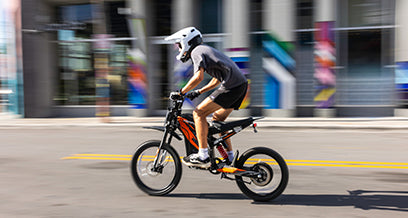
The performance, safety, and comfort of a fat tire electric bike depend heavily on a single, often overlooked variable: tire pressure. Unlike traditional bicycles, electric models carry heavier frames and experience greater propulsion forces, making optimal inflation critical. Understanding how to adjust the fat bike tire pressure allows riders to maximize traction, protect expensive components, and extend battery range across diverse terrains.
At the center of tire performance is the concept of Pounds per Square Inch (PSI) and the "contact patch"—the actual area of the tire tread meeting the ground. A larger contact patch provides superior grip and shock absorption, while a smaller contact patch reduces friction for faster rolling. Finding the perfect balance ensures that the tire protects the wheel rims from impact, prevents premature tread wear, and delivers a stable, secure ride.
Why Fat Bike Tire Pressure Matters More on an E-Bike
Adjusting tire pressure is a standard practice for all cyclists, but the physics of high-powered electric fat tire bikes require a much more precise approach to inflation. The combination of motorized power, heavier structural components, and increased speeds changes how tires interact with the ground.
-
The Weight Factor: Traditional fat bikes typically weigh around 30 to 35 pounds, whereas a modern fat tire electric bike often exceeds 70 pounds. When carrying a rider at speeds of 20 to 28 mph—or even up to 50 mph on professional-grade models—the tires must support significantly higher kinetic energy and downward force.
-
Motor Torque: High-torque hub motors or mid-drive systems transfer immediate power directly to the wheels. If the rear tire pressure is too low, the sudden rotational force can cause the tire to slip against the rim, potentially tearing the inner tube valve.
-
The Range vs. Comfort Trade-off: Lower tire pressure increases the contact patch, acting as natural suspension to absorb trail vibrations. However, this increased deformation raises rolling resistance, forcing the motor to draw more current and reducing overall battery range. Conversely, higher pressures roll efficiently but transfer every bump directly to the frame and rider.
The Ultimate Fat Tire Ebike PSI Chart by Terrain
Selecting the correct starting pressure requires matching the inflation level to both the terrain and the specific width of the tires. The following matrix provides a calibrated starting guide for heavy electric fat tire bikes, contrasting common tire widths.
|
Terrain
|
Recommended PSI Range (4.0" Tires)
|
Recommended PSI Range (5.0" Tires)
|
Primary Benefit
|
|
Pavement & City Streets
|
15 – 20 PSI
|
12 – 17 PSI
|
Maximizes battery range and minimizes rolling resistance
|
|
Gravel & Hardpack
|
11 – 14 PSI
|
9 – 12 PSI
|
Balances vibration damping with efficient rolling speed
|
|
Soft Sand
|
5 – 10 PSI
|
4 – 8 PSI
|
Prevents sinking by maximizing flotation and contact area
|
|
Deep Snow
|
5 – 10 PSI
|
4 – 8 PSI
|
Optimizes lateral grip and traction on slippery surfaces
|
This chart serves as a baseline for a standard rider weighing approximately 150 to 200 pounds. Individual adjustments should be made based on total payload, weather conditions, and personal comfort preferences.
What are the Best PSI for Pavement, Gravel, and Sand?
To get the most out of an electric bicycle with fat tires, riders must understand the physical demands of different surfaces. Each terrain requires a distinct tire profile to balance grip, speed, and structural protection.
Riding on Pavement and City Streets (15–20 PSI)
Riding on smooth asphalt or concrete demands the highest pressure range to minimize rolling resistance. At 15 to 20 PSI, the tire remains firm, reducing the tread deformation that slows down the bike and drains the battery. This firm profile also prevents tread squirm, which is the unstable, squirming sensation felt when cornering on knobby tires at low pressures.
However, exceeding 25 to 30 PSI is highly discouraged. Over-inflation turns the wide tires into hard, unforgiving rollers that transmit every road crack directly to the rider's spine. Furthermore, excessively stiff tires reduce the contact patch so much that cornering traction on wet or dusty pavement is dangerously compromised.
Riding on Gravel and Hard-Packed Dirt (11–14 PSI)
Gravel roads, fire canals, and hard-packed dirt trails represent the sweet spot for mixed-terrain riding. Setting the tires between 11 and 14 PSI provides the ideal compromise between speed and compliance. At this level, the tire is soft enough to deform over small pebbles, loose gravel, and tree roots rather than bouncing off them.
This compliance keeps the tire in constant contact with the ground, maintaining steady power transfer from the electric motor. It also provides excellent vibration damping, reducing hand and wrist fatigue during long off-road excursions without causing sluggish acceleration.
Riding on Sand and Soft Snow (5–10 PSI)
Navigating soft, shifting surfaces like dry beach sand or fresh snow requires a dramatic drop in pressure. Lowering the pressure to 5 to 10 PSI allows the tire to flatten out, creating a massive contact patch that distributes the heavy weight of the e-bike across a wider surface area. This physical phenomenon, known as flotation, allows the bike to glide over the top of soft ground rather than digging in and getting stuck.
Riders should note that steering feels noticeably heavier and slower at these ultra-low pressures, requiring more deliberate physical input to turn. To maintain momentum on soft sand, it is best to use a steady pedal-assist level or gentle throttle input, avoiding sudden acceleration that could cause the rear tire to spin and dig a hole.
What are the Key Factors That Adjust Your Target PSI ?
While terrain charts provide an excellent starting point, tire pressure is not a one-size-fits-all metric. Several critical variables require riders to fine-tune their inflation levels to ensure safety and optimal performance.
Rider Weight and Cargo Load (The "+2 PSI" Rule)
The total weight supported by the tires is the most significant factor in determining the correct PSI. Heavier riders, or those carrying heavy gear on rear cargo racks, must run higher pressures to prevent the tire from compressing completely under load. If a tire bottoms out against a rock or curb, it can pinch the inner tube against the metal rim—a failure known as a pinch flat or snakebite—and potentially dent the wheel rim.
As a general rule of thumb, every additional 20 pounds of rider or cargo weight beyond a baseline of 180 pounds requires an increase of 1 to 2 PSI. This adjustment keeps the tire's structural shape intact under heavy loads.
Tire Width (4.0" vs. 5.0" Tires)
The volume of air inside a tire dictates how much pressure is needed to support a load. A 5.0-inch tire holds a significantly larger volume of air than a 4.0-inch tire. Because of this massive air chamber, wider tires can run at lower pressures while still providing the same level of rim protection and load-bearing capacity as a narrower tire at a higher PSI.
Inner Tubes vs. Tubeless Setups
Traditional inner tubes are highly susceptible to pinch flats when run at low pressures. For riders who frequently tackle rugged trails or soft sand at single-digit PSI, converting to a tubeless setup is highly beneficial. Without an inner tube to pinch, tubeless tires can safely run down to 5 PSI, offering maximum traction and self-healing protection against small thorns and debris.
Finding the Best Fat Tire Ebike for All Terrains
To fully capitalize on the benefits of adjustable fat bike tire pressure, riders need a high-performance platform engineered to handle extreme forces. A robust chassis, powerful motor, and advanced suspension system work in perfect harmony with wide tires to deliver a superior riding experience.
For those seeking ultimate off-road capability, HappyRun offers a premium lineup of Fat Tire E Bikes for adult designed to conquer any environment. Models such as the HappyRun G100 Pro, HappyRun G70 Pro, and HappyRun Tank G60 are built to withstand the rigorous demands of high-speed, all-terrain riding.
These advanced machines feature 20"x4.0" ultra-wide tires paired with exceptionally powerful motors ranging from 750W up to a peak of 6000W, delivering incredible torque for climbing and loose sand. Equipped with long-range 72V dual-battery configurations, these bikes ensure that the extra rolling resistance of lower tire pressures will not cut an adventure short. Furthermore, their full suspension systems—consisting of robust front forks and rear shock absorbers—work in tandem with the natural damping of the fat tires to provide unmatched comfort, stability, and control at speeds up to 50 mph.

How to Measure and Adjust Your Ebike Tire Pressure
Achieving the perfect ride quality requires accurate measurement, especially when operating at the lower end of the pressure spectrum. Standard maintenance tools are often insufficient for the unique needs of wide-tired electric bikes.
Most standard bicycle floor pumps feature pressure gauges designed to read up to 120 PSI or higher. Because the scale is so broad, these gauges are notoriously inaccurate at low pressures, often failing to register any difference between 5 PSI and 12 PSI. To get precise readings, riders should invest in a dedicated low-pressure digital pressure gauge designed specifically for fat tires.
-
Check the pressure cold: Always measure tire pressure before riding, as tire rotation and ambient sunlight can warm the air inside, temporarily raising the PSI reading.
-
Inflate or deflate slowly: Because fat tires hold a large volume of air, small adjustments can make a big difference. Use a high-volume pump to add air, or gently press the valve core to release small bursts of air.
-
Perform trailside adjustments: Riders should carry a compact hand pump and a digital gauge on rides. This allows for lowering the pressure when entering a sandy beach, and pumping the tires back up before returning to paved roads.
Conclusion
Finding the ideal fat bike tire pressure is one of the simplest yet most effective ways to transform the riding experience on a best fat tire ebike. By adjusting the PSI to match pavement, gravel, or sand, riders can unlock the perfect balance of traction, comfort, and battery efficiency. Taking the time to measure pressure accurately before each ride ensures that every journey is safe, smooth, and fully optimized for the terrain ahead.
Frequently Asked Questions About Fat Tire Ebike PSI
Managing fat bike tire pressure raises several common questions among electric bike enthusiasts. Below are direct answers to help riders optimize their setups.
What does psi stand for?
PSI stands for Pounds per Square Inch, a unit used to measure air pressure inside a tire. For fat tire e-bikes, PSI indicates how much air pressure the tire contains and directly affects traction, comfort, rolling resistance, and handling. Lower PSI creates a larger contact patch for better grip on surfaces such as sand and snow, while higher PSI reduces rolling resistance and is generally better suited to paved roads.
What is the recommended tire pressure for fatbikes?
For fatbikes, the recommended tire pressure typically depends on the terrain and tire size. Based on the guide you provided:
-
Pavement & city streets: 15–20 PSI
-
Gravel & hardpack: 11–14 PSI
-
Soft sand: 5–10 PSI
-
Deep snow: 5–10 PSI
These are starting ranges for a rider weighing about 150–200 lbs. Rider weight, tire width, and riding conditions may require adjustments.
Can I ride my fat tire ebike with 5 PSI on pavement?
Riding at 5 PSI on hard pavement is not recommended. At this ultra-low pressure, the tire will feel incredibly sluggish, steering response will be severely compromised, and tread wear will accelerate rapidly. Additionally, the massive increase in rolling resistance will drain the battery much faster, significantly reducing overall range. It is best to save 5 PSI for soft sand or deep snow, and pump the tires up to at least 15 PSI for paved surfaces.
How often should I check my fat tire ebike's tire pressure?
Fat bike tire pressure should be checked before every single ride. Because fat tires operate at relatively low pressures, even a minor loss of 1 to 2 PSI due to temperature changes or natural seepage can drastically alter how the bike handles, corners, and absorbs impacts. Regular checks ensure consistent performance and prevent unexpected rim damage.
What happens if my fat tire ebike PSI is too high?
If the tire pressure is set too high, the e-bike will lose its primary off-road advantages. The tires will bounce violently over small rocks and trail imperfections, reducing traction and control. This stiffness also creates a harsh, uncomfortable ride and increases the risk of a tire blowout when hitting sharp obstacles.
Do electric fat tire bikes get flats easily?
Due to their wide contact patch, fat tires have a slightly higher probability of rolling over sharp debris. However, maintaining the correct PSI prevents pinch flats, which are the most common cause of tube failures. Choosing high-quality e-bikes with puncture-resistant tire casings and utilizing tubeless setups or tire liners will further minimize the risk of flats on rugged trails.
Is 40 PSI too high for bikes?
For most fat tire e-bikes, 40 PSI is considerably higher than the typical operating range and may make the ride harsh and reduce traction, especially on sand, snow, gravel, or uneven trails. Fat tires are designed to operate at relatively low pressures, often around 5–20 PSI, depending on the tire, rider weight, and terrain. On pavement, a higher pressure may improve rolling efficiency, but riders should never exceed the maximum PSI printed on the tire sidewall or specified by the manufacturer. For most fat tire e-bikes, 40 PSI would generally be excessive unless the specific tire manufacturer explicitly permits it.
Recent Posts


