




How To Maintain Electric Motorcycle Batteries Long-term?
Long-term electric motorcycle battery care requires a three-pronged approach: 1. Charge discipline – Avoid full discharges and maintain 20-40% charge levels during storage. 2. Fluid management – Use distilled water to replenish dried electrolytes annually under professional guidance. 3. Hardware vigilance – Replace chargers every 24 months and inspect battery casings monthly for cracks. These practices prevent sulfation, electrolyte depletion, and thermal runaway – the primary causes of premature battery failure.
Electric motorcycle under $3000
Why Should Charging Habits Dictate Battery Lifespan?
Optimal charging preserves lithium-ion/lead-acid chemistry through: - Partial cycling: Frequent 30-70% charge cycles reduce electrode stress - Temperature control: Charge at 10-30°C to prevent lithium plating - Smart termination: Use chargers with automatic shutoff at 95% capacity Data shows batteries maintained at 25°C with 50% charge retain 94% capacity after 500 cycles versus 67% in poorly managed units.
Recent studies reveal that fast charging (above 2C rates) accelerates cathode degradation by up to 300% compared to standard charging. For commuter bikes requiring daily charging, invest in adaptive chargers that modulate current based on battery temperature. Night riders should avoid consecutive deep discharges - three successive 80% discharges cause more wear than ten 30% cycles. Always allow 15-minute cooldowns after heavy use before plugging in.
When Should Electrolyte Maintenance Be Performed?
Conduct electrolyte interventions: - Annual checks: Measure specific gravity (1.265-1.299 optimal range) - Distilled water top-ups: Add 5-10ml/cell when levels drop below plate tops - Post-overcharge recovery: After accidental overcharges, balance electrolytes immediately Note: Improper watering causes 23% of lead-acid failures according to Battery Council International reports.
How Does Environmental Storage Affect Battery Degradation?
Storage protocols combat parasitic drain and corrosion: - Climate-controlled zones: Maintain 15°C with 40-60% humidity - Charge buffer: Store at 50% state-of-charge (SOC) - Terminal protection: Apply dielectric grease to prevent sulfation Winter storage demands monthly voltage checks – batteries lose 0.5-1% charge daily at -10°C.
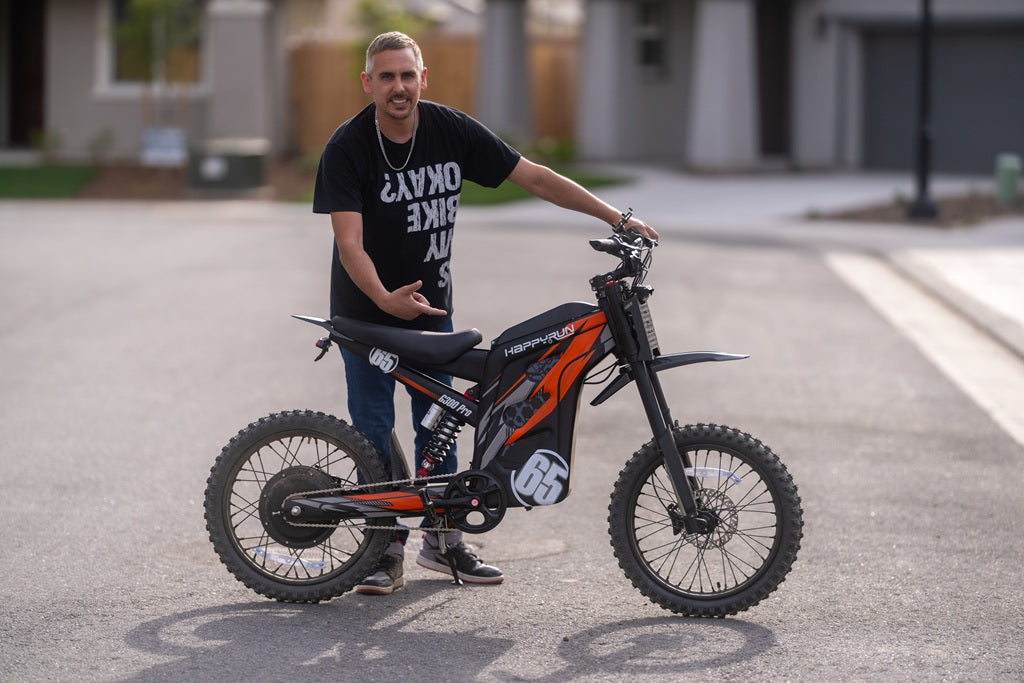
HappyRun Electric Bike for Adults
Extended storage requires physical preparation beyond charge management. Remove batteries from motorcycles and place on insulated surfaces - concrete floors accelerate discharge rates. Use vapor-proof containers with silica gel packs in humid climates. For lithium batteries, disable bluetooth modules to prevent standby drain. Military storage protocols recommend wrapping terminals in acid-neutralizing felt washers when storing beyond 6 months.
Which Diagnostic Tools Prevent Catastrophic Failures?
| Tool | Function | Optimal Range |
|---|---|---|
| Hydrometer | Electrolyte density | 1.265-1.299 sg |
| Load Tester | Capacity verification | ≥80% CCA rating |
| IR Thermometer | Hotspot detection | ΔT ≤5°C cell-to-cell |
Quarterly load testing identifies weak cells before complete bank failure.
Conclusion
Proactive maintenance transforms electric motorcycle batteries from consumables into durable assets. Through disciplined charging cycles (avoiding both 0% and 100% SOC), environmental controls, and advanced diagnostics, riders can reliably achieve 5-7 year service life – a 120% improvement over neglectful practices.
FAQ
- Q: How often should I perform deep discharges?
- A: Never intentionally deep discharge – partial cycles preserve electrode integrity. Allow discharges only to 20% SOC maximum.
- Q: Can I use regular tap water for electrolyte?
- A: Absolutely not – minerals in tap water create conductive bridges between plates. Use only distilled water meeting ASTM D1193 Type IV standards.
- Q: What indicates imminent battery replacement?
- A: Three red flags: 1) Voltage drops >0.5V under load 2) Charge time reduction >25% 3) Electrolyte turbidity with sediment.


