



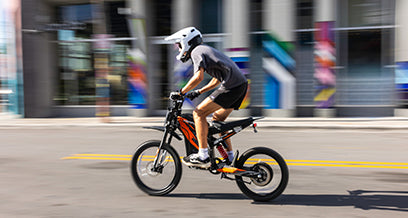


How to Choose the Best Adult Electric Dirt Bike?
Electric dirt bikes are revolutionizing off-road riding, offering eco-friendly alternatives to traditional gas-powered models while maintaining high performance and versatility. With various options available, choosing the right adult electric dirt bike can enhance your riding experience significantly.
How do electric dirt bikes work?
Electric dirt bikes operate using an electric motor powered by rechargeable batteries, eliminating the need for gasoline. This technology enables instant torque and smooth acceleration, making them ideal for both beginners and experienced riders. The regenerative braking feature captures kinetic energy during deceleration, converting it back into electrical energy, thus extending the bike's range.
Chart: How Electric Dirt Bikes Function
| Component | Function |
|---|---|
| Electric Motor | Provides propulsion without emissions |
| Battery | Stores energy for powering the motor |
| Regenerative Braking | Converts kinetic energy back into battery power |
What are the benefits of electric dirt bikes for adults?
Electric dirt bikes offer numerous advantages over their gas-powered counterparts:
- Eco-Friendly: They produce zero emissions, contributing to a cleaner environment.
- Low Maintenance: Fewer moving parts mean reduced maintenance costs.
- Quiet Operation: Near-silent operation allows for riding without disturbing wildlife or other outdoor enthusiasts.
- Instant Torque: Riders experience immediate acceleration, enhancing control and responsiveness.
Chart: Benefits of Electric vs Gas-Powered Dirt Bikes
| Feature | Electric Dirt Bikes | Gas-Powered Dirt Bikes |
|---|---|---|
| Emissions | Zero | High |
| Maintenance Cost | Low | High |
| Noise Level | Very Low | Moderate to High |
| Acceleration | Instant | Gradual |
What Should You Consider When Buying an Electric Dirt Bike?
Choosing the right electric dirt bike goes far beyond comparing top speeds and price tags. Since these machines blur the line between bicycle and motorcycle, riders need to weigh several interconnected factors — power, safety, comfort, and practicality — to find a bike that truly fits their riding style and skill level. Here's what actually matters when making your decision:
Battery Life and Range
Range anxiety is real, especially once you're deep on a trail with no charging station in sight. Battery capacity is typically measured in watt-hours (Wh) or by voltage/amp-hour combinations (e.g., 72V/30Ah), and it directly determines how far — and how hard — you can ride before recharging. A casual weekend rider covering 15-20 miles per outing can get by with a smaller battery, but if you're planning longer trail sessions or using the bike for both commuting and off-road fun, look for models offering 60+ miles of range. Also consider charging time: fast-charging batteries that reach 80% in 2-3 hours minimize downtime, while removable/swappable battery packs let you carry a spare for extended rides without waiting around.
Weight Capacity and Payload
An underrated but critical spec. Every electric dirt bike has a maximum payload rating — typically listed as rider weight plus cargo — and exceeding it doesn't just void your warranty, it compromises acceleration, braking distance, suspension performance, and battery efficiency. Riders should account for their own body weight plus riding gear (helmet, boots, hydration pack) when checking this spec. Bikes built on reinforced frames — aluminum alloy or carbon steel — with payload capacities of 300+ lbs offer more headroom for larger riders or those who like to load up gear for longer excursions.
Terrain Compatibility
Not all "off-road" bikes are built for the same terrain. A bike optimized for hard-packed fire roads may struggle on loose sand or rocky single-track, and vice versa. Key terrain-related specs to check:
- Tire size and tread pattern: Wider, deeply-treaded tires (19"/17" knobby setups) grip better on loose or muddy surfaces; narrower tires suit hard-packed trails and mixed-use riding.
- Suspension travel: Longer front fork and rear shock travel (7"+ combined) absorbs impacts on rocky, technical trails; shorter travel suits smoother terrain and urban commuting.
- Ground clearance: Higher clearance prevents the frame or battery pack from scraping on rocks and roots.
If your riding will mix pavement commuting with weekend trail runs, look for a bike with adjustable ride modes or multi-class speed settings, so you can dial back power for street-legal use and unlock full performance off-road.
Motor Power and Torque
Motor wattage gets the most attention in marketing, but torque is what actually gets you up steep inclines and through technical sections. A high peak wattage number (6,000W+) sounds impressive, but sustained/continuous wattage and peak torque (measured in Nm) tell you more about real climbing ability and how the bike performs under load, not just on paper. Hub motors and mid-drive motors also behave differently — hub motors deliver raw, direct power well-suited to high-speed straight-line performance, while mid-drive motors leverage the bike's gearing for more controlled torque delivery on technical climbs.
Braking and Suspension
At speeds approaching 30-50 MPH, stopping power isn't optional — it's a safety requirement. Hydraulic disc brakes with larger rotors provide significantly more consistent, fade-resistant stopping power than mechanical brakes, especially on long descents. Pair that with quality adjustable suspension (inverted front forks and rear shocks are increasingly common on performance models) to keep the wheels planted and the ride controlled over rough terrain.
Legal Classification and Local Regulations
This is the step riders most often skip — and regret later. High-power electric dirt bikes frequently exceed standard e-bike classifications (Class 1/2/3, capped at 20-28 MPH), which means they may legally require registration, insurance, or off-road-only use depending on your state or country. Many manufacturers now build multi-mode bikes with speed limiters for street-legal riding and a separate "unlocked" off-road mode for private trails — a useful feature if you want flexibility, but always verify local laws before riding on public roads or shared paths.
Value and After-Sales Support
Price matters, but total value matters more. Compare warranty coverage (motor and battery warranties of 1-2 years are increasingly standard), availability of replacement parts, and manufacturer support responsiveness. A slightly higher upfront cost from a brand with reliable customer service and readily available parts often saves money and frustration long-term compared to a cheaper bike with no support infrastructure.
Quick Reference: Buying Checklist
| Factor | What to Check | Why It Matters |
|---|---|---|
| Battery/Range | Voltage, Ah rating, charge time | Determines how far and how often you ride before recharging |
| Weight Capacity | Max payload rating | Affects performance, safety, and warranty coverage |
| Terrain Fit | Tire tread, suspension travel, ground clearance | Matches the bike to your actual riding environment |
| Motor Power | Peak vs. continuous wattage, torque (Nm) | Determines real-world climbing and acceleration ability |
| Braking | Hydraulic vs. mechanical, rotor size | Critical for safety at higher speeds |
| Legal Class | Speed modes, local e-bike/moto regulations | Avoids fines or registration issues |
| Support | Warranty length, parts availability | Protects your investment long-term |
Which models are the top electric dirt bikes available?
Several models stand out in the market today:
- Sur-Ron Light Bee X: Known for its lightweight design and powerful performance, it handles inclines easily and offers customizable modes.
- E Ride Pro SS: This model boasts a top speed of 60 mph and a range of up to 90 miles, making it suitable for long rides.
- NIU XQi3: With a unique blend of street legality and off-road capability, it provides an adjustable suspension for maximum comfort.
- HappyRun G300 Pro:Powered by a 6500W peak motor with 245 N·m of torque, it reaches 50 MPH and delivers up to 70 miles of range on its 72V/30Ah removable battery — a standout for riders who want high-speed trail performance at a more accessible price point than premium competitors like the Sur-Ron or E Ride Pro SS.
Why is the Sur-Ron Light Bee X a popular choice?
The Sur-Ron Light Bee X has gained popularity due to its exceptional performance features, including:
- Peak power of up to 5 kW.
- Ability to conquer steep inclines with ease.
- Lightweight alloy frame that enhances maneuverability.
This model is particularly favored by adventure seekers who prioritize both power and sustainability.
How does the E Ride Pro SS compare to other models?
The E Ride Pro SS stands out with its advanced battery management system, ensuring optimal battery health over time. Key specifications include:
- Motor power rated at 5 kW with a peak output of 12 kW.
- Adjustable sport suspension for enhanced control on rugged terrain.
- A maximum weight limit of 300 lbs, accommodating various riders.
Compared to other models, it offers superior performance and versatility in off-road conditions.
Where can you find reliable brands like HappyRun?
HappyRun is a well-known brand in the e-bike industry with nine years of experience in providing high-quality electric bikes. Their commitment to innovation and sustainability makes them a great choice for customers in the USA looking for reliable electric dirt bikes.Once upon a time in 2014, HappyRun was born with a vision to revolutionize mobility through eco-friendly solutions like their Ebike SUV and City SUV models. These bikes combine elegance, performance, and sustainability, catering to adventure seekers who want to explore while minimizing their carbon footprint.
FAQ Section
-
Are electric dirt bikes suitable for beginners?
Yes, many models cater specifically to beginners with features that enhance stability and control. -
How long does it take to charge an electric dirt bike?
Charging times vary by model but typically range from 2 to 8 hours depending on battery capacity. -
Can I ride electric dirt bikes on public roads?
Some models are street-legal; however, regulations vary by location, so check local laws before riding on public roads.


