



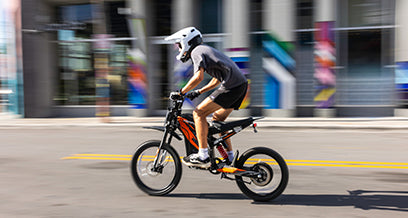


Electric Dirt Bike Off-Road Performance: Complete Guide
Electric dirt bikes excel off-road thanks to instant torque delivery, lightweight frames, and quiet, emissions-free operation. Brushless motors deliver strong power-to-weight ratios, while modern suspension setups soak up rough terrain. Compared to gas-powered bikes, they run near-silent and produce zero tailpipe emissions, which makes them a good fit for trails with noise or environmental restrictions. HappyRun's electric dirt bike lineup is built around these strengths, with a focus on durability under repeated hard use.
How Do Motor Specifications Impact Off-Road Performance?
Motor output on electric dirt bikes generally ranges from around 10 kW to 35 kW, and higher wattage typically means quicker acceleration and better hill-climbing ability. Mid-drive motors tend to balance weight more evenly across the frame, which helps with handling on technical terrain, while hub motors are simpler to maintain since there's less drivetrain hardware involved. When comparing models, torque figures matter as much as peak wattage — a bike with strong low-end torque generally feels more controllable on steep, loose climbs than one optimized purely for top speed.
Why Is Battery Range Critical for Off-Road Riding?
Most electric dirt bikes use lithium-ion batteries in 60V–72V configurations, typically delivering somewhere in the 40–80 mile range per charge under off-road conditions. Actual range depends heavily on terrain and rider weight — steep, technical trails can cut range by 30% or more compared to flatter routes, and cold weather can reduce efficiency by up to 20%. Riders planning multi-day trips should look for models with swappable battery packs or fast-charging support (commonly 2–3 hours for a full charge), since a spec-sheet range number and real-world range rarely match exactly once terrain and temperature come into play.
| Battery Type | Voltage | Range (Off-Road) | Charge Time |
|---|---|---|---|
| 60V 20Ah | 60V | 40–50 miles | 4 hours |
| 72V 24Ah | 72V | 55–65 miles | 3.5 hours |
| 72V 32Ah | 72V | 70–80 miles | 2.5 hours |
What Role Does Suspension Play in Handling Rough Terrain?
Adjustable hydraulic forks, typically offering 200–300mm of travel, help absorb impacts from jumps and uneven ground. Rear mono-shock setups with adjustable preload help maintain tire contact and traction over rough sections. Suspension quality has an outsized effect on rider confidence on technical trails — a bike with well-tuned suspension feels planted at speed even when the ground underneath isn't, which matters more for real-world off-road riding than most other spec-sheet numbers.
Are Regenerative Braking Systems Useful Off-Road?
Regenerative braking recovers energy during downhill descents, which helps extend range on hilly trails. Paired with hydraulic disc brakes, it also helps prevent brake fade on long technical descents. Many systems let riders adjust how aggressively regen kicks in — lighter settings work better on loose gravel, where sudden torque reversal could break traction, while stronger settings suit packed, predictable surfaces. In muddy or loose conditions, it's often worth dialing back regen intensity to avoid unexpected wheel lock.
| Terrain Type | Recommended Regen Level |
|---|---|
| Steep, Rocky | High |
| Sandy Slopes | Low |
| Forest Trails | Medium |
What Software Features Enhance Off-Road Riding?
Multiple ride modes (commonly labeled something like Eco, Trail, and Sport) let riders adjust power delivery and traction control to match conditions. GPS tracking and ride diagnostics through a companion app help riders keep tabs on battery health and location. Features like hill-hold assist and wheelie control add a meaningful safety margin during aggressive off-road riding, and terrain-adaptive traction control — which shifts power between wheels when it detects slip — is increasingly common on newer models. Riders who spend a lot of time on one type of trail often find it worth saving custom profiles for suspension stiffness, throttle response, and regen intensity specific to that terrain.
| Ride Mode | Power Output | Traction Control | Best For |
|---|---|---|---|
| Eco | 60% | High | Range Conservation |
| Trail | 85% | Adaptive | Mixed Terrain |
| Sport | 100% | Low | Technical Ascents |
What Should You Look for When Buying an Electric Dirt Bike?
HappyRun, founded in 2014, focuses on durable e-bikes built for off-road use. When comparing models, prioritize IP67 waterproof ratings, adequate motor power for your terrain, and a real-world range that comfortably covers your typical ride. It's worth testing suspension adjustability in person if possible, and checking that the battery carries proper safety certification. Look for manufacturers that back their bikes with a solid warranty and accessible after-sales support — for U.S. buyers, that also means confirming parts and service are available domestically. See HappyRun's current model lineup to compare specs side by side.
Frequently Asked Questions
- How Often Should I Service an Electric Dirt Bike?
- Lubricate the chain roughly every 200 miles and have the motor bearings inspected annually. Because electric drivetrains have far fewer moving parts than gas engines, HappyRun's models generally need less frequent maintenance overall.
- Can Electric Dirt Bikes Handle Water Crossings?
- Most electric dirt bikes, including IP67-rated models, can handle splashes, rain, and shallow water crossings — HappyRun's IP67-rated bikes are built to withstand up to about 1 meter of submersion for up to 30 minutes. That said, no electric dirt bike is designed for prolonged submersion or riding through deep water, and doing so risks damaging the battery and electrical components. After any water crossing, it's good practice to dry off connectors and check for corrosion before your next ride.
- Are Electric Dirt Bikes Suitable for Aggressive or Competitive Riding?
- Yes, within the growing world of electric off-road riding. Many riders use electric dirt bikes for backyard tracks, closed-course riding, and casual racing with friends, and organized electric motocross classes continue to expand at the amateur level. They're not yet part of mainstream professional gas-powered racing series, but the instant torque and quiet operation make them a strong option for aggressive recreational riding.
- What Are the Cons of Electric Dirt Bikes?
- The main trade-offs are limited range compared to gas bikes, a higher upfront cost, longer charging times, and less charging infrastructure while out on the trail. Some models also have lower peak power than comparable gas-powered dirt bikes, which can matter on very demanding terrain.
```


