



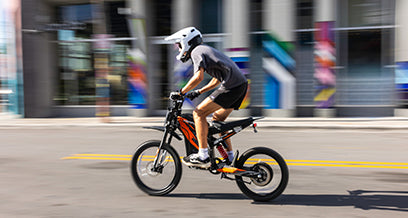


Electric Dirt Bike vs eMTB: Which Has Better Suspension?
The rapid evolution of off-road electric vehicles has created an exciting crossover territory for trail enthusiasts. Riders looking to conquer rugged terrain are no longer limited to traditional combustion options or manual bicycles, leading to a major debate: Electric Dirt Bike vs eMTB. At the center of this comparison is suspension performance, which directly determines how well a machine handles high-speed impacts, technical climbs, and demanding descents.
Choosing between these two ride types requires a close look at how their suspension systems are engineered. While a full suspension electric mountain bike focuses on lightweight agility and pedaling efficiency, electric dirt bikes for adults are built to withstand heavy-duty impacts and high-speed trail obstacles. Understanding these mechanical differences is key to finding the right machine for your riding style.
Understanding the Core Differences: Electric Dirt Bike vs eMTB
Before evaluating suspension performance, it is essential to understand the structural, weight, and power differences that define these two distinct categories of electric off-road vehicles. These foundational elements dictate how manufacturers design and tune the front forks and rear shocks for each platform.
What is an eMTB (Electric Mountain Bike)?
An electric mountain bike, commonly referred to as an eMTB, is fundamentally a traditional mountain bike integrated with an electric motor and battery. Most premium models, including well-known options like Trek mountain bikes, utilize a mid-drive motor that assists the rider's pedaling efforts rather than relying solely on a throttle.
These bikes prioritize lightweight materials such as carbon fiber or high-grade aluminum alloys to maintain agility. The suspension systems on a full suspension ebike are highly sophisticated, typically offering between 140mm and 170mm of travel. This setup is engineered to optimize traction, maintain pedaling efficiency, and keep the overall vehicle weight low, usually ranging between 45 and 55 pounds.
What is an Electric Dirt Bike?
In contrast, an electric dirt bike is a throttle-driven machine built on a motorcycle-style chassis. Most models rely entirely on high-wattage electric motors to deliver instant torque and high top speeds, though some entry-level or youth-oriented models include basic footpegs or pedals — these are typically fixed platforms for foot positioning rather than a functional pedal-assist drivetrain like an eMTB's.
Because they are built to handle high-speed jumps, deep ruts, and harsh landings, they feature much heavier frames and reinforced components. A typical electric dirt bike weighs between 110 and 150 pounds, requiring heavy-duty suspension systems that can support the increased mass and absorb extreme forces without bottoming out.
Suspension Compared: Electric Dirt Bike vs eMTB
The structural differences between these two vehicles lead to completely different suspension architectures. To understand how they perform on the trail, it is helpful to look at the technical specifications side-by-side.
|
Feature
|
Full Suspension eMTB
|
Electric Dirt Bike
|
|
Typical Suspension Travel
|
140mm – 170mm
|
200mm – 300mm+
|
|
Spring Type
|
Primarily Air-Sprung
|
Coil-Spring or Heavy-Duty Air
|
|
Stanchion Diameter
|
35mm – 38mm
|
38mm – 45mm+ (Inverted)
|
|
Primary Focus
|
Weight savings, pedal efficiency, traction
|
Impact absorption, high-speed stability
|
|
Average Vehicle Weight
|
45 lbs – 55 lbs
|
110 lbs – 150 lbs
|
Note: The figures above reflect general industry ranges for each category and are for reference only. Actual specifications vary significantly by brand and model — for example, entry-level and competition-grade electric dirt bikes can differ by 100+ lbs in weight and 100mm+ in suspension travel. Always check the manufacturer's official specifications for the specific model you are considering.
eMTB Suspension: Precision, Efficiency, and Weight Savings
Suspension systems on a full suspension electric bike designed for mountain biking rely heavily on air-sprung shocks. Air suspension allows riders to precisely adjust the spring rate by changing the air pressure inside the chamber, making it highly customizable for different rider weights.
These systems use complex multi-link suspension kinematics designed to minimize pedal bob, which is the unwanted bobbing motion caused by pedaling forces. By keeping the suspension active under pedaling loads, the system ensures that the rear tire maintains maximum contact with the ground during technical climbs without wasting the rider's energy.
Electric Dirt Bike Suspension: Heavy-Duty Impact Absorption
Electric dirt bikes utilize robust, motorcycle-grade suspension components designed to withstand high-speed impact forces. The front end of these bikes often features inverted (upside-down) forks, which place the thicker, stiffer outer tubes at the triple clamps to minimize flex under heavy braking and cornering.
The rear suspension typically consists of a heavy-duty coil shock or a large-volume air shock paired with a progressive linkage system. With stanchion diameters often exceeding 40mm and travel figures reaching 200mm or more, these systems are built to absorb massive energy from high-speed trail riding, deep whoops, and large jumps.
Which Performs Better on the Terrains : Electric Dirt Bike vs eMTB
On the trail, the differences in suspension design translate directly into distinct handling characteristics. The ideal setup depends heavily on the speed, terrain, and technical difficulty of the trails you ride.
Technical Singletrack and Tight Switchbacks
When navigating tight, twisty singletrack trails, the lightweight chassis of a full suspension electric mountain bike offers superior precision. The suspension is tuned to provide excellent trail feedback, allowing the rider to pump through rollers, pre-hop obstacles, and make rapid line changes.
At slower speeds, the heavy-duty suspension of an electric dirt bike can feel overly stiff or slow to react. The heavier chassis requires more physical effort to man-handle through tight switchbacks, making the agile eMTB the clear winner for tight, technical forest trails.
High-Speed Fire Roads and Deep Whoops
On wide-open fire roads, desert trails, and deep sandy whoops, the electric dirt bike completely dominates. The long-travel suspension easily swallows consecutive high-speed impacts that would quickly overwhelm and bottom out an electric mountain bike.
The high-speed damping circuits in dirt bike forks and shocks are engineered to keep the chassis stable at speeds exceeding 40 mph. An eMTB ridden at these speeds over rough terrain would feel nervous, under-damped, and prone to deflected lines.
Steep Climbs and Technical Rock Gardens
Climbing performance introduces a critical technical factor: the relationship between motor placement, suspension responsiveness, and unsprung weight. Unsprung weight refers to any components of the bike—such as the wheels, tires, brakes, and sometimes the motor—that are not supported by the suspension springs.
Unsprung Weight Analysis:
-
Hub-Drive Motors: Common in some electric dirt bikes, a hub-drive motor places the heavy motor mass directly inside the rear wheel hub. This significantly increases unsprung weight, making the rear wheel slower to react to rapid bumps. The suspension shock must work harder to control the heavy wheel, which can lead to a harsh ride and loss of traction over fast, repetitive rocks.
-
Mid-Drive Motors: Standard on premium eMTBs and high-end electric dirt bikes, a mid-drive motor mounts the motor centrally within the frame. This keeps the motor weight sprung, allowing the rear suspension linkage and shock to react instantly to trail imperfections. The result is superior tire-to-ground contact, smoother power delivery, and maximum traction when climbing technical rock gardens.
Choosing the Right Setup: Suspension vs. Riding Style
Selecting the right vehicle involves balancing your performance expectations with the practical realities of where you plan to ride. Both platforms offer incredible off-road capability, but they cater to entirely different riding styles.
When to Choose a Full Suspension eMTB
An eMTB is the ideal choice for riders who enjoy the physical aspect of trail riding and want to explore multi-use trail networks.
Best for:
-
Technical singletrack and dedicated mountain bike parks.
-
Riders who prefer active pedaling and high-finesse handling.
-
Accessing trails where motorized off-highway vehicles (OHVs) are prohibited.
When to Choose an Electric Dirt Bike
An electric dirt bike is perfect for those seeking pure speed, powerful acceleration, and the ability to conquer rugged off-road terrain without pedaling.
Best for:
-
High-speed desert riding, motocross tracks, and OHV parks.
-
Riders who want to tackle large jumps and deep ruts.
-
Off-road enthusiasts looking for a heavy-duty, low-maintenance machine built for high impact.
Can You Ride an Electric Dirt Bike Like an eMTB?
Given the overlap in off-road capability, it is natural to wonder whether an electric dirt bike can simply be ridden the way you would ride a full suspension eMTB. The short answer is no — not comfortably, and not safely in most cases.
The core issue comes back to the suspension architecture covered above. An electric dirt bike's long-travel, coil-sprung suspension is tuned to absorb high-speed impacts and big drops, not to respond to the light, precise inputs of pedal-driven riding. Combined with a significantly heavier frame — often 110 lbs or more versus 45–55 lbs for a full suspension eMTB — an electric dirt bike simply does not maneuver, climb, or handle tight singletrack the way an eMTB does.
There is also the pedaling factor. Most electric dirt bikes for adults are throttle-driven and either lack functional pedals entirely or include them only to meet certain e-bike classification requirements. Without a true pedal-assist drivetrain, the bike cannot replicate the pedaling efficiency, traction control, and rider-powered climbing that define the eMTB riding experience.
That said, the reverse crossover is more common: some riders use a full suspension eMTB on dirt-bike-style trails for a lighter, more agile alternative, provided the terrain and local trail access rules allow it. If your priority is trail agility, pedaling exercise, and easier transport, an eMTB remains the better choice — even if it can't match an electric dirt bike's raw impact absorption at high speed.
Top Recommendations for Off-Road Enthusiasts
If pedaling efficiency and trail agility matter most to you, a full suspension eMTB is the better fit, as outlined above. But if you still want the rugged, motorcycle-style capability of an electric dirt bike — just with a gentler power curve and more trail-friendly handling than a full-power throttle machine — HappyRun's Tank series offers a middle ground worth considering.
HappyRun Tank G60
Best for: Ultimate off-road comfort and dual-suspension performance.
The HappyRun Tank G60 is designed for riders who want a motorcycle-style aesthetic combined with robust trail capability. It features a high-performance dual suspension system, combining a front hydraulic suspension fork with a rear spring shock absorber. This setup effectively absorbs bumps, ruts, and vibrations on rough terrain. Powered by a 750W brushless motor (with a peak output of 1500W), the Tank G60 delivers reliable torque for climbing and trail riding, while its fat tires provide excellent traction across sand, snow, and mud.

HappyRun Tank G60 Pro
Best for: Extended range and smart, moped-style convenience.
The HappyRun Tank G60 Pro builds on the G60's off-road foundation with a moped-inspired design geared toward riders who want more range and everyday convenience alongside trail capability. It's powered by a 750W motor with a 2,000W peak output, still capped at a controlled 20 mph top speed for confident handling on mixed terrain. The G60 Pro's standout feature is its extended range, delivering 70+ miles per charge — well beyond the standard G60 — making it a strong choice for longer trail sessions or all-day riding without frequent recharging. It also adds NFC smart unlock for keyless convenience, along with the same hydraulic disc brakes and fat-tire traction that make the lineup capable across sand, dirt, and uneven ground.

Conclusion
When comparing an electric dirt bike vs eMTB, there is no single winner; instead, the best suspension system depends entirely on your riding environment. The sophisticated, lightweight air suspension of a full suspension eMTB offers unmatched precision, efficiency, and agility on tight, technical singletrack. Meanwhile, the heavy-duty, long-travel suspension of an electric dirt bike provides the robust impact absorption and high-speed stability needed to conquer deep ruts, jumps, and open desert terrain. By matching your local trail regulations and personal riding style to the right suspension architecture, you can ensure an optimal off-road experience.
FAQ
Before making a final decision, it is helpful to clarify some of the most common questions regarding trail access, suspension necessity, and component technology.
Can I ride an electric dirt bike on local mountain bike trails?
Generally, no. Most local mountain bike trails are strictly restricted to Class 1, 2, or 3 eMTBs that require pedal-assist. Because electric dirt bikes are throttle-driven, heavier, and significantly faster, they are classified as motorized vehicles or off-highway vehicles (OHVs). They must be ridden on designated OHV trails, motorized multi-use trails, or private land.
Is a full suspension electric bike necessary for off-road riding?
While hardtail electric bikes can handle smooth dirt paths and gravel roads, a full suspension setup is highly recommended for true off-road riding. Rear suspension keeps the rear tire planted on the ground, which dramatically improves braking control, climbing traction, and overall comfort when riding over rocks, roots, and uneven terrain.
What is the difference between air and coil suspension on electric off-road bikes?
Air suspension uses compressed air as the spring, making it highly adjustable and lightweight. It is ideal for eMTBs where weight savings and fine-tuning are priorities. Coil suspension uses a physical steel spring, offering a highly linear feel and excellent small-bump sensitivity. Coil shocks are highly durable and perform consistently under heavy loads, making them popular for heavy-duty electric dirt bikes.
Recent Posts


