



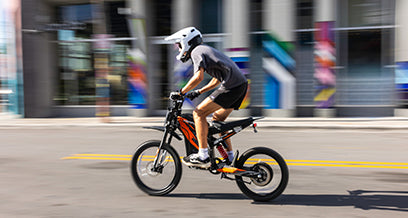


Why the G300 Pro Performs Exceptionally Well in Winter Terrain
Built for Snow, Cold, and Unpredictable Off-Road Conditions
Winter riding is the ultimate stress test for any electric dirt bike. Snow, frozen ground, hidden ruts, and reduced traction quickly expose which bikes are genuinely trail-ready—and which are only built for fair-weather riding. While many electric dirt bikes can technically operate in cold temperatures, far fewer are truly engineered to perform when winter terrain pushes every component to its limits.
This is where the HappyRun G300 Pro stands out. Rather than treating winter as a seasonal limitation, its design priorities—high-output usable torque, true off-road wheel geometry, and a heavy-duty suspension system—make cold-weather riding one of its strongest real-world use cases. To understand why it performs so well, you have to look at how winter terrain actually challenges an electric dirt bike.
Winter Terrain Demands More Than Basic Power
Snow and Loose Surfaces Reduce Effective Traction
Snow-covered trails behave very differently from dry dirt. Even a thin layer of snow can dramatically reduce usable traction. Loose snow behaves like sand, while packed or refrozen snow can turn slick without warning—especially in shaded areas or at trail edges.
In real winter riding, the G300 Pro can comfortably handle up to half a foot of snow on unplowed trails, maintaining steady progress without constant throttle correction. Even uneven roadside snowbanks or compacted snow ridges can be crossed smoothly, thanks to consistent torque and proper wheel geometry.
In these conditions, raw top speed becomes irrelevant. What matters is controlled forward momentum—something winter terrain immediately exposes.
Cold Temperatures Expose Weak Torque and Power Delivery
Cold weather thickens lubricants, stiffens suspension components, and reduces battery efficiency. Bikes that rely on higher RPM rather than torque often feel inconsistent or underpowered in winter.
The HappyRun G300 Pro’s 6500W motor focuses on usable torque at low to mid speeds, allowing riders to move through snow without aggressive throttle input. This makes it easier to stay composed when traction is limited and surfaces change rapidly.
Suspension Stress Increases on Frozen and Uneven Ground
Frozen trails transmit sharper impacts than dirt. Snow hides rocks and ruts, creating uneven load changes that stress suspension systems. Bikes with basic suspension quickly feel harsh, increasing fatigue and reducing control.
The 6500W Torque Advantage in Winter Riding
Instant Torque vs Gradual Power on Snow
Winter riding rewards instant, predictable torque—not gradual power buildup. Riders often need short, controlled bursts of power to climb small inclines, clear snow-filled ruts, or maintain momentum through soft sections.
The G300 Pro delivers torque immediately but smoothly, allowing precise input rather than sudden wheel spin.
Why 6500W Helps Maintain Momentum in Soft Terrain
Momentum is critical in winter. Once lost, restarting on snow—especially uneven or compacted snow—can be difficult. The G300 Pro’s torque helps the bike stay on top of loose terrain instead of digging in.
Lower-powered bikes often require more throttle, increasing instability. The G300 Pro achieves forward drive with less effort, improving rider confidence.
Controlled Power Instead of Unpredictable Wheel Spin
Winter punishes bikes with abrupt power delivery. The G300 Pro emphasizes control over aggression, allowing riders to modulate power precisely when transitioning between snow, ice, and exposed dirt.
Why 19” / 17” Off-Road Tires Matter in Snow
Larger Diameter Tires Track Better in Snow and Ruts
The 19-inch front and 17-inch rear wheel setup—borrowed from full-size off-road motorcycles—plays a major role in winter stability. Larger wheels roll over snow-covered obstacles more easily and are less likely to drop into soft sections.
This makes unplowed trails and uneven snowpack far more manageable.
Front and Rear Balance for Winter Stability
The 19"/17" combination balances front tracking with rear traction. In winter, this balance helps prevent sudden front washouts or rear breakaway, especially when traction changes mid-corner.
Tire Contact Patch and Cold-Weather Grip
Cold stiffens rubber. Larger off-road tires naturally provide a more forgiving contact patch, helping maintain grip even when compounds harden in low temperatures.
Suspension Strength: Staying Composed on Frozen Trails
Frozen Ground Amplifies Impact Forces
Frozen dirt behaves closer to concrete than soil. Without proper damping, impacts transfer directly to the rider, increasing fatigue and reducing control.
Inverted Front Fork and Rear Suspension Benefits
The G300 Pro’s inverted front fork offers improved rigidity and better resistance to flex on uneven, frozen terrain. Its rear air suspension allows fine tuning for heavier winter gear, maintaining correct ride height and handling balance.
Reduced Rider Fatigue in Winter Conditions
In winter, fatigue sets in faster. A suspension system that absorbs impacts efficiently allows riders to stay relaxed and in control longer—an important safety factor.
Weight Distribution and Chassis Stability on Slippery Surfaces
Why Balanced Weight Matters More Than Lightweight Design
Winter riding isn’t about speed. It’s about stability, predictability, and control. The G300 Pro’s balanced chassis keeps the bike planted on slippery surfaces, especially when riding through mixed snow and exposed ground.
Turning, Braking, and Center of Gravity Awareness
Cornering requires reduced speed in winter. Traction and center of gravity don’t behave like they do in summer, and icy patches can cause sudden loss of grip. Riders should slow down before turns and avoid aggressive lean angles.
Front braking, in particular, demands caution. On snow or ice, front brakes can lock easily, leading to immediate loss of control. Riders accustomed to heavy front-brake use should adjust their habits in winter, relying more on balanced braking and smoother inputs.
Why Some Electric Dirt Bikes Struggle in Winter
Bikes designed primarily for summer trails often lack:
- Sufficient torque at low speeds
- Suspension tuned for hard impacts
- Tire geometry suited for loose or frozen ground
These limitations become obvious once snow and cold enter the equation.
Year-Round Riding as a Design Philosophy
The G300 Pro is built with year-round riding in mind. Rather than optimizing for a single season, its components work together as a system that remains effective when conditions deteriorate.
Real Winter Riding Scenarios Where the G300 Pro Excels
Snow-Covered Trails and Forest Roads
On forest trails with patchy snow, the G300 Pro’s torque and wheel size help maintain steady progress without constant throttle corrections.
Cold-Weather Off-Road Exploration
For riders exploring remote winter terrain, reliability and predictability matter more than outright speed. The G300 Pro delivers consistent performance even when temperatures drop and surfaces vary.
Mixed Terrain Transitions
Winter rides often involve rapid transitions between snow, mud, ice, and dry ground. The G300 Pro handles these changes smoothly, reducing the need for constant riding style adjustments.
Is the G300 Pro the Right Winter Electric Dirt Bike for You?
Riders Who Benefit Most From Its Winter Capabilities
The G300 Pro is especially well-suited for:
- Experienced off-road riders
- Adventure-focused riders who ride year-round
- Those who value control and durability over lightweight design
When a High-Torque Electric Dirt Bike Makes Sense
If winter riding is more than an occasional novelty and part of your regular riding calendar, high torque and robust suspension quickly justify themselves.
Skill Level and Winter Confidence
While winter riding always requires caution, a predictable, capable bike lowers the barrier to confidence. Riders spend less time fighting the bike and more time focusing on the trail.
Winter Riding Is as Much About the Rider as the Bike
Know Your Electric Dirt Bike
Winter riding magnifies unfamiliarity. Knowing how your specific electric dirt bike responds to throttle, braking, and weight shifts is essential. The more familiar you are with your bike, the more confidently you can react when traction disappears unexpectedly.
Winter Riding Safety Comes First
The G300 Pro’s strong handling makes winter riding more manageable—but safety always comes first. Stability, control, and smooth inputs matter far more than pushing limits in cold conditions.
After-Ride Care: A Critical Part of Winter Performance
Winter riding doesn’t end when the ride stops. Snow packs into wheel hubs, spokes, suspension components, and braking surfaces.
After each winter ride, riders should:
- Clean snow and moisture from wheels and rims
- Wipe down areas where snow accumulates
- Prevent ice buildup that can cause corrosion or component wear
Consistent post-ride cleaning protects long-term performance and reliability.
Final Thoughts: Winter Terrain Rewards Purpose-Built Machines
Winter doesn’t forgive compromises. Snow, cold, and frozen ground expose weaknesses that stay hidden in summer. The G300 Pro performs exceptionally well in winter not because of a single standout feature, but because its power delivery, wheel geometry, suspension, and chassis design work together as a unified system.
Rather than merely surviving winter terrain, the G300 Pro thrives in it. For riders who view winter as another chapter in the riding season—not a reason to stop—the bike’s capabilities become more valuable when conditions are at their toughest.
FAQ: G300 Pro and Winter Terrain Performance
Is the G300 Pro safe to ride in snow?
Yes, when ridden responsibly with appropriate tires and riding habits. Its torque and stability make snow riding more manageable than on lower-powered bikes.
Can it handle unplowed trails?
Yes. Riders can comfortably navigate unplowed paths and moderate snow depth, including compacted roadside snow buildup.
Does 3000W power really matter in winter?
Absolutely. Torque helps maintain momentum and control when traction is limited.
How should braking change in winter?
Front brakes should be used more cautiously. Smooth, balanced braking reduces the risk of sliding on snow or ice.
Is the G300 Pro built for year-round riding?
Yes. Its off-road geometry, suspension, and power characteristics support true all-terrain, all-season use.


Leave a comment