



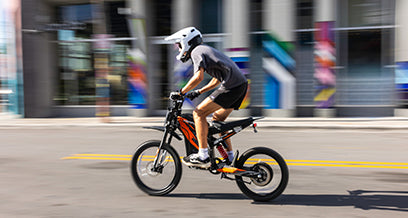


Navigating Rough Roads: Why E-Bikes With Fat Tire Are the Best Choice for Commuters
For commuters dealing with potholes, cracked asphalt, wet pavement, and unpredictable road conditions, choosing the right e-bike is about more than speed—it’s about stability, safety, and low maintenance. That’s exactly why the fat tire electric bike has become a top choice for urban riders.
Models like the HappyRun G70 are designed to handle rough city streets with confidence. With wide tires, electric assist, and commuter-friendly geometry, the G70 bridges the gap between comfort-focused riding and real-world practicality—especially for riders who don’t want to slow down every time the pavement gets rough.
When a Fat Tire Electric Bike Makes Sense for Commuting
A fat tire electric bike isn’t just for trails or weekend adventures. In many cities, road conditions resemble light off-road terrain more than smooth bike lanes.
Here’s when a fat tire setup truly shines for commuters:
Handling Potholes and Broken Pavement
Wide tires roll over potholes, cracked concrete, and uneven road seams with far less impact than narrow tires. Instead of sharp jolts, the ride stays controlled and predictable—critical for daily commuting safety.
Comfort Without Complex Suspension
A fat tire electric bike naturally absorbs vibration. This reduces fatigue on longer commutes and lowers maintenance costs compared to full-suspension systems.
Stability in Wet or Slippery Conditions
On wet pavement, painted road lines, or loose gravel, fat tires maintain a larger contact patch. That translates into better braking control and reduced slip risk, especially during sudden stops in traffic.
Electric Assist for Stress-Free Riding
Electric assist makes stop-and-go commuting easier, especially on inclines, bridges, or longer routes. Riders arrive less tired—and more consistent day to day.
How Tire Width Impacts Commuter Performance
Tire width is one of the most important factors in how a fat tire electric bike behaves on city streets.
Wider Tires: Pros for Commuters
- Improved Safety: More grip on wet pavement and uneven surfaces
- Shock Absorption: Reduced vibration over potholes and rough asphalt
- Load Handling: Better stability when carrying backpacks, groceries, or work gear
Trade-Offs to Consider
- Slightly higher rolling resistance
- Heavier wheels compared to narrow-tire city bikes
For commuters, these trade-offs are often worth it. The gain in confidence and ride quality outweighs minor efficiency losses—especially with electric assist smoothing things out.
Is a 20-Inch Fat Tire E-Bike Good for City Streets?
Yes—and for many commuters, 20-inch fat tires are the sweet spot.
A 20-inch fat tire electric bike balances urban efficiency with real-world durability:
- Wide enough to absorb potholes and rough pavement
- Narrow enough to stay agile in traffic and bike lanes
- Lower rolling resistance than ultra-wide off-road tires
The HappyRun G70 uses a 20-inch fat tire setup specifically tuned for mixed urban riding. It delivers stability without feeling sluggish, making it ideal for riders navigating city streets, sidewalks, and shared paths daily.
Fat Tire Electric Bikes for Longer Commutes
Are fat tire electric bikes suitable for longer daily rides? Absolutely—when designed correctly.
Why They Work for Distance
- Reduced Rider Fatigue: Less vibration means less strain over time
- Consistent Control: Stable handling even as road conditions change
- Electric Efficiency: Motor assist offsets added tire resistance
For commuters facing varied routes—smooth roads one moment, broken pavement the next—a fat tire electric bike provides consistency that narrow tires struggle to match.
HappyRun G70: Built for Urban Reality
The HappyRun G70 is designed with commuters in mind—not just specs on paper.
Key highlights include:
- 20-inch fat tires optimized for city streets and rough pavement
- Powerful electric assist for hills, bridges, and longer routes
- Stable frame geometry for predictable handling in traffic
- Low-maintenance design suited for daily use
- Comfort-focused ride without overcomplicated suspension systems
Instead of targeting extreme off-road riders, the G70 focuses on what urban commuters actually face: potholes, wet roads, stop-and-go traffic, and the need for reliability every single day.
Choosing the Right Fat Tire Electric Bike for Commuting
If your main goal is commuting, look for:
- 20-inch fat tires (best balance for city riding)
- Strong braking performance for wet pavement
- Upright riding position for visibility and comfort
- Components designed for low maintenance
- Proven reliability from an established brand
For riders comparing different commuter-ready options, explore our full collection of fat tire electric bikes designed for daily commuting, where you’ll find models optimized for comfort, safety, and real-world urban riding.
FAQs: Fat Tire Electric Bikes for Commuters
Are fat tire electric bikes good for daily commuting?
Yes. They offer better stability, comfort, and safety on rough or wet roads, making them ideal for daily urban use.
Do fat tires make commuting safer?
Fat tires improve grip and control, especially on potholes, gravel, and wet pavement—key safety advantages for city riders.
Are fat tire electric bikes harder to maintain?
Not necessarily. Many commuters find them lower maintenance than complex suspension systems, with fewer components to service.
Can fat tire e-bikes handle city bike lanes and traffic?
Yes. A 20-inch fat tire setup provides stability without sacrificing maneuverability in urban environments.
Is a fat tire electric bike suitable year-round?
Absolutely. They perform well in rain, cold weather, and variable road conditions, making them a reliable year-round commuting option.


Leave a comment