



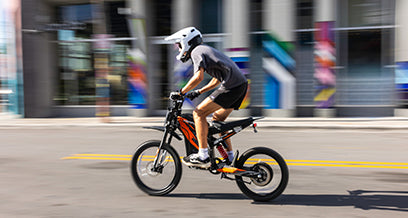


An e-bike hub motor is a type of electric motor integrated into the wheel hub of an electric bicycle, providing direct propulsion to the wheels. This design allows for a compact setup that simplifies installation and maintenance. Understanding what an electric bicycle hub motor is can help you decide if it's the right choice for your cycling needs.
What is an e-bike hub motor?
An electric bicycle hub motor is located in the center of either the front or rear wheel, providing power directly to that wheel. This design allows for straightforward installation, since it doesn't interfere with the bike's chain or gears. Hub motors are typically brushless DC motors, which offer good efficiency and relatively low maintenance requirements compared to more mechanically complex drive systems.

How does an electric bicycle hub motor work?
An e-bike hub motor operates by using electrical energy from the battery to create motion. When activated, current flows through coils in the stator, creating a magnetic field that interacts with permanent magnets in the rotor. This interaction causes the rotor to spin, turning the wheel and propelling the bike forward.
Hub motors can be either geared or direct-drive, and this distinction significantly affects their performance characteristics — geared hub motors are lighter and more efficient at lower speeds, while direct-drive hub motors are simpler, more durable, and often support regenerative braking, but tend to be heavier.

What are the advantages of using a hub motor electric bike?
Using a motor electric bike with a hub motor offers several benefits:
- Simplicity: Hub motors are easier to install and maintain since they do not rely on complex drivetrain systems.
- Cost-Effectiveness: Generally, e-bikes with hub motors tend to be more affordable than those with mid-drive systems.
- Less Wear on Drivetrain: Since power is delivered directly to the wheel, there is less stress on gears and chains, leading to lower maintenance costs.
- Regenerative Braking: Some hub motors offer regenerative braking capabilities, which can extend battery life by converting kinetic energy back into electrical energy.

How do you choose between hub and mid-drive motors?
When deciding between hub vs mid drive motor, consider these factors:
- Riding Style: If you primarily ride on flat terrain or for commuting, a hub motor may suffice. For hilly areas or off-road conditions, mid-drive motors often provide better performance.
- Weight Distribution: Mid-drive motors offer better weight distribution, enhancing handling and stability.
- Maintenance Needs: Hub motors generally require less maintenance compared to mid-drive systems due to fewer moving parts.
- Cost Considerations: Hub motors are typically less expensive than mid-drive options, making them more accessible for budget-conscious buyers.
What are the performance differences between hub and mid-drive motors?
The performance characteristics of hub and mid-drive motors differ in a few key ways:
-
Torque Delivery: Mid-drive motors usually deliver stronger torque relative to their power rating for climbing, since they can leverage the bike's gears — shifting to a lower gear on a steep hill effectively multiplies the motor's torque at the wheel.
-
Efficiency: Efficiency depends on more than motor type alone — it's shaped by terrain, speed, and how well the motor and gearing are matched to riding conditions. Mid-drive motors can be more efficient on hilly terrain where gear-shifting helps maintain an optimal pedaling cadence, while hub motors can be just as efficient for steady-state riding on flat terrain.
-
Ride Feel: Riders often report that mid-drive systems feel more like natural pedaling, since power is applied through the same drivetrain used for manual pedaling, whereas hub motors can feel more like being pushed or pulled independently of pedaling effort.
- Range: Range is primarily determined by battery capacity (measured in watt-hours) rather than motor type. A hub-motor e-bike with a larger battery can easily out-range a mid-drive e-bike with a smaller one — don't assume one motor type guarantees better range without comparing the actual battery specs.

FAQ Section
-
What is the average speed of e-bikes with hub motors?
Most e-bikes equipped with hub motors reach speeds between 20 and 28 mph, largely governed by local e-bike class regulations rather than the motor's raw capability — many hub motors are capable of higher speeds but are limited electronically to comply with local laws.
-
How far can I travel on a single charge with a hub motor?
Typical ranges run from about 25 to 50 miles, depending primarily on battery capacity, rider weight, terrain, and how much you rely on throttle versus pedal assist. Since range is driven more by the battery than the motor type, compare watt-hour (Wh) ratings when evaluating different bikes.
-
Are there specific maintenance requirements for hub motors?
Hub motors need relatively little upkeep, but a few habits help extend their lifespan: check wiring connections periodically for corrosion or looseness, keep the motor area free of dirt and debris (especially after off-road or wet-weather rides), and monitor for unusual noises or reduced power, which can indicate bearing wear. Battery health also matters — following the manufacturer's charging guidelines helps both the battery and motor perform reliably over time.
-
Can a hub motor be repaired if it fails, or does it need full replacement?
It depends on the failure. Minor issues like a damaged wire, connector, or controller can often be repaired or replaced individually. However, internal motor failures (such as a burnt-out winding or damaged bearings) are frequently more cost-effective to address by replacing the entire hub motor, since specialized rebuilding requires tools and expertise most riders and even many shops don't have on hand.
-
Is a front hub motor or rear hub motor better?
Each has trade-offs. Rear hub motors are more common and provide better traction and a more natural feel, since most of the rider's weight sits over the rear wheel — but they add complexity if you ever need to remove the rear wheel for a flat tire. Front hub motors are simpler to install and service, but can affect steering feel, especially at higher power levels, and may struggle for traction on loose or wet surfaces since less weight sits on the front wheel.
Conclusion
Hub motors remain one of the most practical and cost-effective ways to power an e-bike, particularly for commuting and casual riding on relatively flat terrain. Their simple design means less maintenance and a lower price point, though they trade off some hill-climbing performance and low-speed handling compared to mid-drive systems.
Neither motor type is universally "better" — the right choice depends on where and how you ride. If you're mostly on paved roads or bike paths, a hub motor will likely serve you well. If you're tackling steep hills or technical off-road terrain regularly, a mid-drive motor's torque and balance advantages are worth the added cost. Whichever you choose, remember that range and overall performance depend on the whole system — battery capacity, controller efficiency, and gearing — not the motor type in isolation. Look at the complete spec sheet, not just the motor label, before making a decision.