




E-Bike Motor Types Explained: Hub Motor vs Mid-Drive
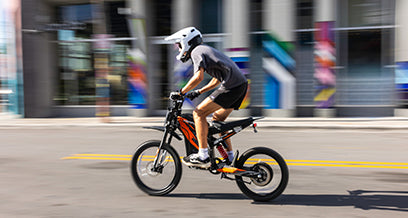
Choosing the right motor shapes how a bike climbs, how far it goes, and how the whole ride feels — and a mid drive motor and an ebike hub motor deliver that power in very different ways. In short: a mid drive electric bike delivers more climbing torque and better balance on hills and rough terrain, while a hub motor is simpler, more affordable, and better suited to flat commuting.
This guide breaks down both motor types, with real examples from HappyRun's lineup, so you can pick the right one for your ride — starting with the comparison below.
Hub Motor vs Mid-Drive: Quick Comparison
|
Feature
|
Mid Drive Motor
|
Hub Motor
|
|
Motor Placement
|
At the crank
|
Inside the wheel
|
|
Peak Torque (HappyRun models)
|
240 to 245 N.m
|
120 to 134 N.m
|
|
Weight Balance
|
Weight sits low and centered
|
Weight sits at the wheel
|
|
Drivetrain Care
|
Needs regular chain and gear upkeep
|
Rarely needs attention
|
|
HappyRun Mid Drive Ebike
|
—
|
|
|
HappyRun Hub Ebike
|
—
|
|
|
Best For
|
Hills, trails, technical terrain
|
Flat commuting, budget builds
|
|
Tradeoff
|
More drivetrain upkeep in exchange for stronger climbing
|
Less climbing torque in exchange for simpler upkeep
|
In essence, if you want to boost your climbing power and control on rough terrain, a mid drive ebike is the better choice. If you want simple, affordable, and steady on flat ground, a hub motor ebike is excellent.
What Is a Mid Drive Motor?
A mid drive motor mounts at the bike's crank instead of inside a wheel:
-
It's a motor mounted at the bike's crank, between the pedals, instead of inside a wheel.
-
It connects to the same chain and gears you pedal with, the same path your own leg power already uses.
-
Because it works through the bike's gearing, a mid-drive motor lets riders select lower gears to increase wheel torque when climbing.
-
Its centered position keeps weight low and balanced, which matters most on rough or technical terrain.
-
Mid-drive motors are common on performance-oriented e-bikes, cargo ebikes, and some off-road electric bike models where climbing ability and weight distribution matter.
A mid drive ebike tends to feel like riding a naturally geared bicycle, just with a serious power boost built in.
Main Features of Mid Drive Ebikes
A mid drive motor brings several standout features that set it apart from a hub motor design.
-
Torque Multiplication
A mid drive motor sends power through the same gears you pedal with, so shifting to a lower gear multiplies torque the same way it multiplies your own leg power on a climb.
This is exactly why a mid drive ebike can out climb a hub motor bike with a similar wattage rating.
-
Balanced Weight Distribution
Because the motor sits low and centered near the pedals instead of out in a wheel, a mid drive ebike handles more predictably on loose dirt, gravel, or tight trails.
Balance becomes critical the moment you leave pavement, especially at higher speeds on a fast electric dirt bike.
-
Battery Efficiency
Since the motor works with the gears instead of fighting a constant load, a mid drive ebike often pulls more range out of the same size battery on hilly routes.
Riders covering longer distances with elevation changes tend to see better real world range from mid drive ebikes.
-
Natural Pedaling Feel
Because power flows through the same chain and gears as your legs, pedaling on a mid drive ebike feels closer to a standard bicycle than a hub motor bike does.
Riders who care about a natural, connected feel while pedaling usually prefer this over the more electric feeling push of a hub motor.
-
Drivetrain Maintenance
The tradeoff for all that torque is upkeep. A mid drive motor pushes extra power through the chain and gears, so they wear faster than on a hub motor bike.
Skipping drivetrain care on a mid drive electric bike shortens its lifespan and can hurt performance over time.
Where Mid Drive Ebikes Shine
Mid drive ebikes earn their higher price tag in exactly the conditions where hub motors struggle. Two real HappyRun models show what mid drive power looks like in practice.
HappyRun F18 2.0
The HappyRun F18 2.0 runs a 6000W peak mid drive motor with 245 N.m of peak torque, the highest torque figure in HappyRun's lineup. It reaches a top speed of 46 mph with up to 60 miles of range, and it carries a 300 lbs payload capacity. Built for steep climbs and technical terrain, the F18 2.0 is a strong pick if you want a mid drive ebike focused on raw climbing power.

HappyRun G300 SE Ultra
The HappyRun G300 SE Ultra also runs a 6000W peak mid drive motor, paired with a larger 60V 31Ah battery for a riding range of up to 65 miles. It reaches a top speed of 44 mph and supports a 350 lbs payload capacity, the highest in this comparison. If you want mid drive torque with a bit more range and payload room, the G300 SE Ultra is worth a look.

What Is a Hub Motor?
A hub motor works like this:
-
It is a motor built directly into the hub of a wheel, usually the rear one.
-
Instead of sending motor power through the bike's chain and gears, it drives the wheel directly.
-
It's the standard choice on most budget and mid range ebikes, prized for being simple and affordable.
-
It comes in two forms: geared hub motors, which are lighter, and direct drive hub motors, which are heavier but nearly silent.
-
It supports both throttle and pedal assist riding, depending on the bike.
HappyRun's engineers describe the goal as keeping ebike ownership simple, so riders can focus more on the ride and less on the mechanics.
Main Features of Hub Motor Ebikes
A hub motor delivers motor power directly through the wheel rather than sending that motor power through the chain and gears.
-
Simplicity
A hub motor skips the drivetrain almost entirely, since it doesn't rely on the chain or gears to spin the wheel.
Fewer moving parts mean fewer things that can fail, which keeps repair costs and downtime lower over the life of the bike.
-
Lower Cost
Hub motors cost less to manufacture, and that savings usually gets passed down into the price of the whole bike.
A hub motor ebike is often the most accessible entry point if you're trying electric biking for the first time or shopping on a budget.
-
Sustained Speed
Once a hub motor gets moving, it holds a steady pace well on flat ground, since it spins the wheel at a constant rate no matter what gear the bike is in.
Riders who commute on paved roads or bike paths get smooth, predictable power without much fuss.
-
Hill Performance
This is where a hub motor shows its limits. Because it can't lean on the bike's gears, it has to draw more current to climb, and it can feel underpowered the moment the road tilts upward.
Riders in hilly areas, or anyone eyeing an electric dirt bike for adults, may find a plain hub motor build underpowered on steep climbs.
Where Hub Motor Ebikes Shine
Hub motors aren't just a budget compromise, they genuinely shine in the right setting. Two real HappyRun ebike models show what hub drive power looks like in practice.
HappyRun G300 Pro
The HappyRun G300 Pro runs a 72V hub drive motor rated at 6500W peak power, reaching a top speed of 50 mph. It's the fastest model in HappyRun's electric dirt bike for adults lineup, with a riding range of up to 70 miles on a single charge and a payload capacity of 350 lbs. If speed on open trails is your priority, this hub motor build delivers it.

HappyRun G18 Pro
The HappyRun G18 Pro also runs a hub drive motor, this one rated at 4500W peak power on a 60V system. It trades some top speed for range, reaching up to 75 miles per charge, the longest range in HappyRun's dirt bike lineup, with the same 350 lbs payload capacity. If all day range matters more than outright speed, the G18 Pro's ebike hub motor setup is built for exactly that.
Hub Motor vs Mid-Drive: Which Motor Should You Choose for Your Riding Style?
If you just want the short answer for your situation, match it to the scenario below.
-
Flat commuting, tight budget: choose a hub motor. It's simpler, cheaper to maintain, and covers daily riding without the extra cost of a mid-drive system.
-
Steep climbs or technical trails: choose a mid drive motor. Its higher torque and gear-driven power delivery are built specifically for hard climbs and rough terrain.
-
Chasing top speed on open trails: choose a hub motor. It drives the wheel directly, which is well suited to sustained speed on open, flatter trails.
-
All-day range without recharging: choose a hub motor. Without the extra drivetrain load, it's an efficient, low-maintenance choice for long, steady rides.
-
A natural, bicycle-like pedaling feel: choose a mid drive motor. Because power routes through the chain and gears, assist feels more connected to your own pedaling than a hub motor's push.
How to Decide Between Mid Drive and Hub Motor
A few quick questions can help narrow down which motor fits your riding style.
Step 1: Check Your Terrain
If you deal with hills, gravel, or off-road trails often, lean toward a mid drive ebike. If most of your riding stays on flat streets and bike paths, a hub motor will likely cover your needs.
Step 2: Set Your Budget
Mid-drive ebikes cost more, but they deliver more capability for that extra spend. Hub motor ebikes tend to sit at a lower price point, making them a solid starting point if you're new to electric biking.
Step 3: Think About Maintenance
A mid drive motor asks you to keep the chain and gears in good shape, since they carry the motor's power too. A hub motor asks less of you long term, since it barely touches the drivetrain.
Step 4: Consider Ride Feel
If you want a bike that pedals like a bicycle with a boost, a mid drive electric bike wins here. If you're fine with a more electric feeling push, a hub motor works well too.
Step 5: Match It to Your Use Case
If you're shopping for an electric dirt bike for adults, torque and balance usually matter more than top speed, which is exactly where mid-drive motors like the F18 2.0 and G300 SE Ultra earn their keep. If open trail speed matters more to you, a hub drive option like the G300 Pro or G18 Pro is worth a look instead.
Conclusion
Choosing between hub motor vs mid drive comes down to torque, balance, and how the power should feel underfoot. A mid drive ebike delivers real climbing torque, better balance on rough ground, and a more natural pedaling feel. Models like the HappyRun F18 2.0 and G300 SE Ultra show what mid drive motors can do when torque and balance matter most.
On the other hand, if your riding stays mostly flat, then a hub motor offers a simpler, more affordable option. Its low maintenance, lower cost, and steady power make it a strong choice for many everyday riders, and HappyRun's G300 Pro and G18 Pro both prove a hub motor build can still deliver real speed and range.
Think about your terrain, your budget, and how power should feel under your feet. The motor is just one piece of the puzzle; your frame, brakes, and tires matter too. With the right setup, HappyRun's electric dirt bike lineup can get you riding with confidence, whether that's a mid drive ebike ready for the trail or a hub motor commuter build.
FAQs
What is the main difference between a mid drive motor and a hub motor?
A mid drive motor sits at the crank and drives the ebike through its chain and gears, while a hub motor sits inside a wheel and spins it directly. That difference is why a mid drive ebike typically delivers more usable torque on hills, while a hub motor delivers simpler, cheaper power on flat ground.
How much torque should I look for in a mid drive ebike?
Look for at least 100 N.m of torque for serious trail riding, and closer to 200 N.m or more for real climbing power on steep terrain. The HappyRun F18 2.0, for comparison, runs 245 N.m of peak torque from its mid drive motor.
Are HappyRun's electric dirt bike for adults models hub motor or mid drive?
Both. The F18 2.0 and G300 SE Ultra run mid drive motors built for torque and technical climbs. The G300 Pro and G18 Pro use hub drive motors instead, tuned for higher top speed and longer range.
Do mid drive motors really get better range than hub motors?
On hilly or mixed terrain, yes, since a mid drive ebike uses the bike's gears instead of fighting a constant load. On flat ground, the range gap between hub motor vs mid drive narrows quite a bit.
Is a mid drive ebike worth the extra cost over a hub motor?
If you climb hills, ride off road, or want a natural pedaling feel, yes, the extra cost of a mid drive electric bike usually pays for itself in performance. If your riding stays flat and mostly on pavement, a hub motor ebike gives you most of the benefit for less money.
Recent Posts

Sep 09, 2026
E-Bike Motor Types Explained: Hub Motor vs Mid-Drive


Sep 01, 2026


